


Table of Contents
- Introduction
- What flaxseed oil contributes to skin nutrition
- What the evidence suggests about skin benefits
- How to choose flaxseed oil supplements safely
- Who should seek advice before taking it?
- How to judge whether it is helping your skin
- Pair nutrition with direct, targeted skincare
- A considered next step for your skin
- FAQ
Introduction
Flaxseed oil supplements may help improve skin hydration, roughness and sensitivity, but the evidence is limited. Their most credible role is as a source of alpha-linolenic acid, a plant-based omega-3 fatty acid, alongside a balanced diet and consistent skincare. They are not established treatments for acne, eczema, pigmentation or wrinkles.
If you are considering flaxseed oil supplements for skin, the useful questions are whether they suit your concern, how to choose them safely and what improvement you can reasonably expect. Dry-feeling skin still benefits from direct moisturising care, while persistent itching, inflammation or breakouts deserve a more targeted assessment. Understanding those distinctions helps you avoid taking a supplement for a result it has not been shown to deliver.
What flaxseed oil contributes to skin nutrition
A plant-based source of an essential fatty acid
Flaxseed oil comes from the seeds of the flax plant, Linum usitatissimum. It provides alpha-linolenic acid, usually shortened to ALA, an essential omega-3 fatty acid. "Essential" means that the body needs to obtain it through the diet.
Dietary fats contribute to normal body function, including the maintenance of healthy skin. That gives flaxseed oil a nutritional rationale, but it does not mean that every person with dry skin needs an omega-3 supplement. Tightness, flaking and roughness can also reflect cleansing habits, weather, a poorly tolerated product or an underlying skin condition.
Nor does taking more oil necessarily produce better skin. A supplement is most sensibly considered in the context of your usual diet, health and medication, rather than as a stand-alone beauty treatment.
Flaxseed oil is different from ground flaxseed
Whole seeds, ground flaxseed and flaxseed oil are related foods, but they are not nutritionally interchangeable. Ground flaxseed supplies fibre as well as fats and other seed components. Plain flaxseed oil concentrates the oil fraction and does not provide the fibre found in the seed.
Lignans, plant compounds often mentioned in flaxseed discussions, are also associated primarily with the seed material. Some oil products have added lignans, so the label matters. Benefits attributed to ground flaxseed cannot automatically be assigned to an ordinary oil capsule.
This distinction is especially important when a product promises both digestive and skin benefits. An oil supplement should not be expected to perform like a fibre-containing food, and a study of ground seeds does not establish the effects of flaxseed oil on the complexion.
Not all omega-3 supplements are equivalent
Flaxseed oil supplies ALA, whereas fish oils typically supply the omega-3 fatty acids EPA and DHA. These names describe different fatty acids, not different marketing terms for the same ingredient.
The body can convert some ALA into longer-chain omega-3s, but that conversion is limited and variable. You should therefore avoid treating an amount of flaxseed oil as an equivalent amount of fish oil, or assuming that findings from one can be applied to the other.
For a plant-based diet, flaxseed oil can be one way to obtain ALA. Whether a supplement is useful depends on the wider nutritional picture; a registered dietitian can help assess that more effectively than a skin-focused product claim.
What the evidence suggests about skin benefits
Hydration, roughness and barrier function
The most relevant human research suggests that oral flaxseed oil may improve hydration, skin roughness and measures associated with barrier function. A small study in women with sensitive skin reported improvements in these areas. This is encouraging, but the evidence remains too limited to promise the same response for everyone.
The skin barrier helps regulate water loss and protect the surface from external irritants. Transepidermal water loss describes water passing out through the skin; it is one useful measure of barrier function. A change in that measure is not the same as proving that a supplement treats every cause of dryness.
For the reader, the realistic possibility is a gradual improvement in comfort or surface texture, not an immediate moisturising effect after swallowing a capsule. Evidence also does not establish that people whose dietary needs are already met will gain the same benefit as someone whose intake differs.
Sensitivity does not mean a skin disease has been treated
"Sensitive skin" can describe stinging, discomfort or a tendency to react to products. Eczema, rosacea and psoriasis are distinct medical conditions, even when they share symptoms such as redness or dryness.
Research into sensitivity and barrier measures does not establish flaxseed oil as a treatment for these conditions. In particular, the evidence is not convincing enough to recommend it as an eczema therapy or to replace prescribed care.
If your skin is persistently itchy, cracked, painful or inflamed, seek advice rather than increasing a supplement dose. A barrier-supporting skincare routine can remain useful, but identifying the cause of ongoing symptoms is more important than adding another capsule.
Acne, pigmentation and visible ageing need different expectations
There is insufficient evidence to recommend flaxseed oil supplements for clearing acne, fading dark spots or reducing established wrinkles. Claims that they "balance hormones", remove toxins or erase acne scars go beyond what the skin research establishes.
Hydrated skin can look smoother and more luminous because dryness makes texture more noticeable. That cosmetic relationship should not be confused with evidence that an oral oil stimulates collagen, lifts skin or changes pigmentation.
Keep these distinctions in mind when judging a claim:
- Dryness and roughness: there is preliminary human evidence of benefit, with substantial uncertainty about who will respond.
- Eczema, rosacea or psoriasis: a supplement should not replace diagnosis or treatment.
- Acne and post-blemish marks: limited hydration research does not demonstrate clearer pores or fading marks.
- Lines and loss of firmness: there is no established flaxseed oil supplement result that justifies a lifting or wrinkle-correction promise.
Matching the intervention to the concern prevents disappointment. A dry, dull surface and an uneven skin tone may look similar at first glance, yet they call for different kinds of care.
Consider flaxseed oil as a nutritional option with preliminary skin evidence. For a visible concern, first identify whether you are addressing dryness, uneven tone, breakouts or persistent irritation.
How to choose flaxseed oil supplements safely
Read the oil amount and ALA amount separately
A capsule's headline milligram figure often refers to the total flaxseed oil, not the amount of ALA it contains. Those figures are not interchangeable. Look for a clear breakdown of the serving size, total oil and ALA content.
Also check how many capsules make up one serving. Two products with similar front labels may provide different amounts per capsule or require different serving sizes.
Useful label checks include:
- The amount of flaxseed oil and, where stated, ALA per serving.
- The number of capsules or volume of liquid in that serving.
- The complete ingredient list, including added oils and allergens.
- Capsule-shell ingredients if you follow a vegetarian or vegan diet.
- Expiry information, storage directions and accessible manufacturer details.
Clear labelling helps you understand what you are buying. Terms such as "cold-pressed", "organic" or "beauty support" do not, on their own, demonstrate a skin benefit.
Capsules versus liquid oil
Capsules offer a premeasured serving and avoid the taste of the oil. Liquid products offer another format for people who prefer not to swallow capsules, but they require careful measuring according to the label.
Neither format has an inherent advantage for skin simply because of its presentation. The composition, serving and suitability for you matter more than whether the oil comes in a bottle or a softgel.
Follow the product's own storage instructions, including any directions after opening. Do not use a supplement past its expiry date, and ask the manufacturer or pharmacist if its smell, appearance or condition seems unusual.
There is no established universal skin dose
There is no universally established dose of flaxseed oil for improving skin. Commercial serving sizes should not be treated as personalised treatment recommendations, and a larger capsule count is not evidence of greater benefit.
Follow the product label and seek advice from a pharmacist, doctor or registered dietitian if you are unsure whether supplementation is appropriate. Avoid combining several omega-3 products without checking the total intake and the reason for taking each one.
A balanced diet remains the foundation. If you already include sources of unsaturated fats, a supplement may not be the most useful change to make for a dry complexion.
Who should seek advice before taking it?
Medication, surgery and existing health conditions
Flaxseed oil can cause digestive symptoms, including loose stools or abdominal discomfort, particularly at higher intakes. It may also interact with medicines. "Natural" describes its origin, not an absence of side effects.
Check with a pharmacist or doctor before starting it if you take medication, particularly anticoagulant or antiplatelet medicines that affect blood clotting. Medicines for blood pressure or diabetes also warrant a medication-specific check.
Tell your surgical team about supplements if you have an operation or procedure planned. Let them advise you on whether and when to stop; do not invent your own stopping interval or alter prescribed medication to accommodate a supplement.
Pregnancy, breastfeeding and allergies
If you are pregnant or breastfeeding, speak to your doctor before taking flaxseed oil supplements. Safety information is not sufficient to treat a beauty supplement as a routine addition during these periods.
Anyone with a known flaxseed allergy should avoid the relevant product. Check the full formula for other allergens too, because a capsule may contain more than flaxseed oil.
Stop taking a supplement if you develop unwanted effects and seek advice as appropriate. Breathing difficulties or swelling of the lips, tongue or throat require urgent medical attention.
How to judge whether it is helping your skin
Set one realistic goal
If supplementation is suitable for you, start with a clear observation: perhaps your skin feels tight after cleansing, or roughness is noticeable on the cheeks. A specific goal is more useful than expecting a general "glow".
Keep your usual skincare reasonably consistent while assessing a new supplement. Introducing several products and changing your diet simultaneously makes it difficult to understand what has helped or caused a reaction.
You can use a simple sequence:
- Record your starting point. Note comfort, roughness and visible flaking, and take a photograph in consistent lighting if useful.
- Keep the serving consistent with the label and professional advice. Do not increase it because a change is not immediately visible.
- Track tolerability as well as appearance. Digestive discomfort matters even if you think your skin looks better.
- Review whether continuing makes sense. If there is no meaningful benefit, discuss the next step instead of assuming you need a stronger dose.
There is no reliable personal deadline for results. Small studies do not establish how quickly an individual will notice a change, or how long any improvement lasts after stopping.
Reassess dryness before adding more products
If your skin stays uncomfortable, review the conditions affecting it directly. Hot water, repeated washing and harsh or poorly tolerated products can all contribute to dryness. Adding a supplement while continuing those habits may leave the main problem unchanged.
Dehydrated skin can feel tight even when it also looks oily. This is one reason to assess comfort and texture rather than assuming all shine means adequate hydration.
Persistent flaking, itching or redness deserves professional advice, especially if the skin cracks or the problem spreads. Do not wait for a supplement to resolve symptoms that may need a different approach.
A useful result is a noticeable improvement in comfort or texture without troublesome side effects. A higher dose is not the next step when persistent dryness needs reassessment.
Pair nutrition with direct, targeted skincare
Skincare and nutrition work at different levels. Humectants attract water, emollients soften the surface, and ingredients that limit moisture loss help maintain hydration. A well-chosen moisturiser addresses dry-feeling skin directly, while an oral supplement has to be considered within your broader diet and health.
111SKIN was founded by plastic and reconstructive surgeon Dr Yannis Alexandrides and Eva Alexandridis, drawing on his practice at 111 Harley St. in London. That clinical inspiration informs an approach centred on the concern in front of you: hydration and barrier support for dryness, targeted care for uneven tone, and considered application.
A compact routine for dry-feeling skin
Keep the foundation comfortable and repeatable. The following routine puts cleansing, hydration and moisturising care in their practical order:
- Cleanse gently. With dry hands, apply 2 to 3 pumps of Cleansing Oil to dry skin. Massage for 30 seconds, rinse with warm rather than hot water and pat dry.
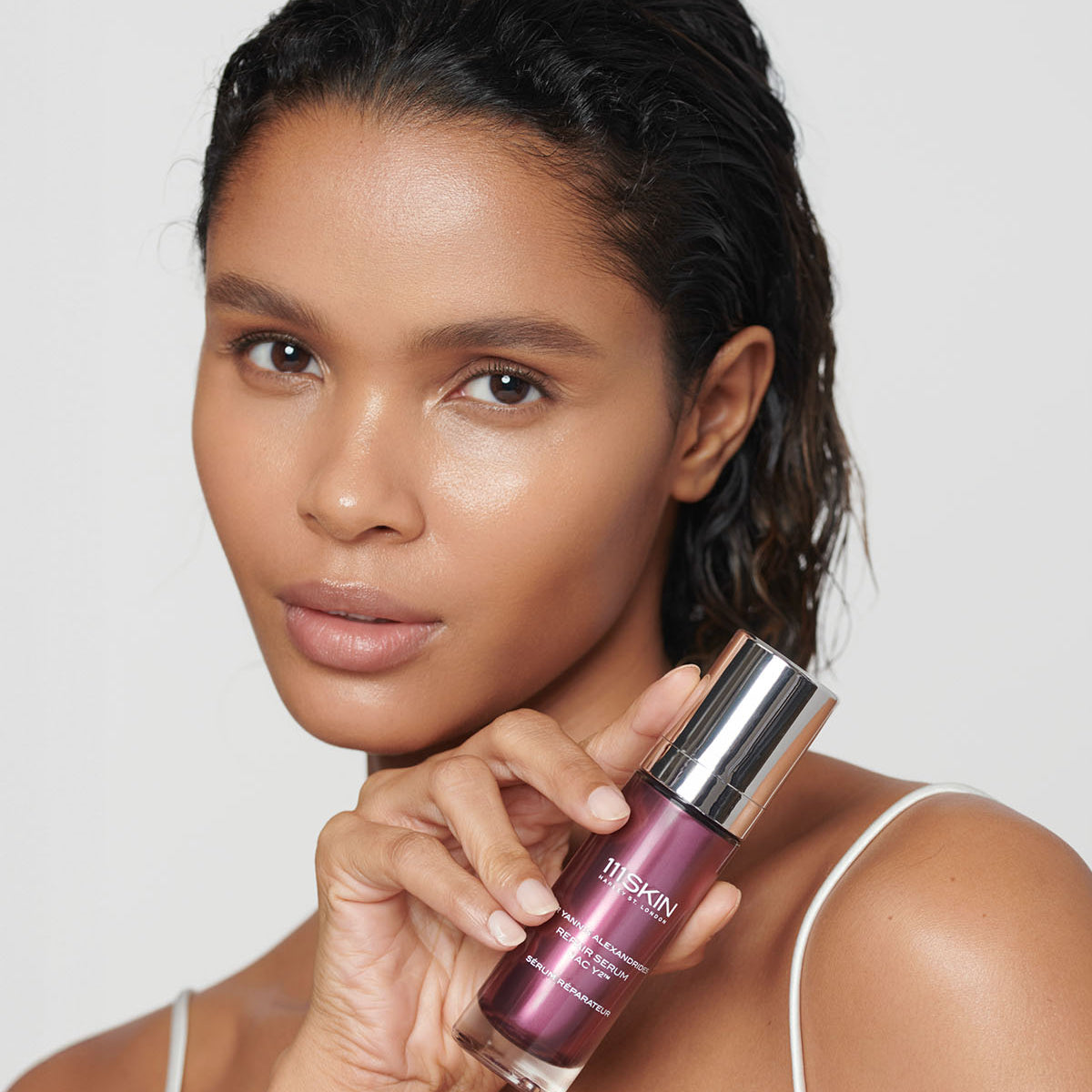
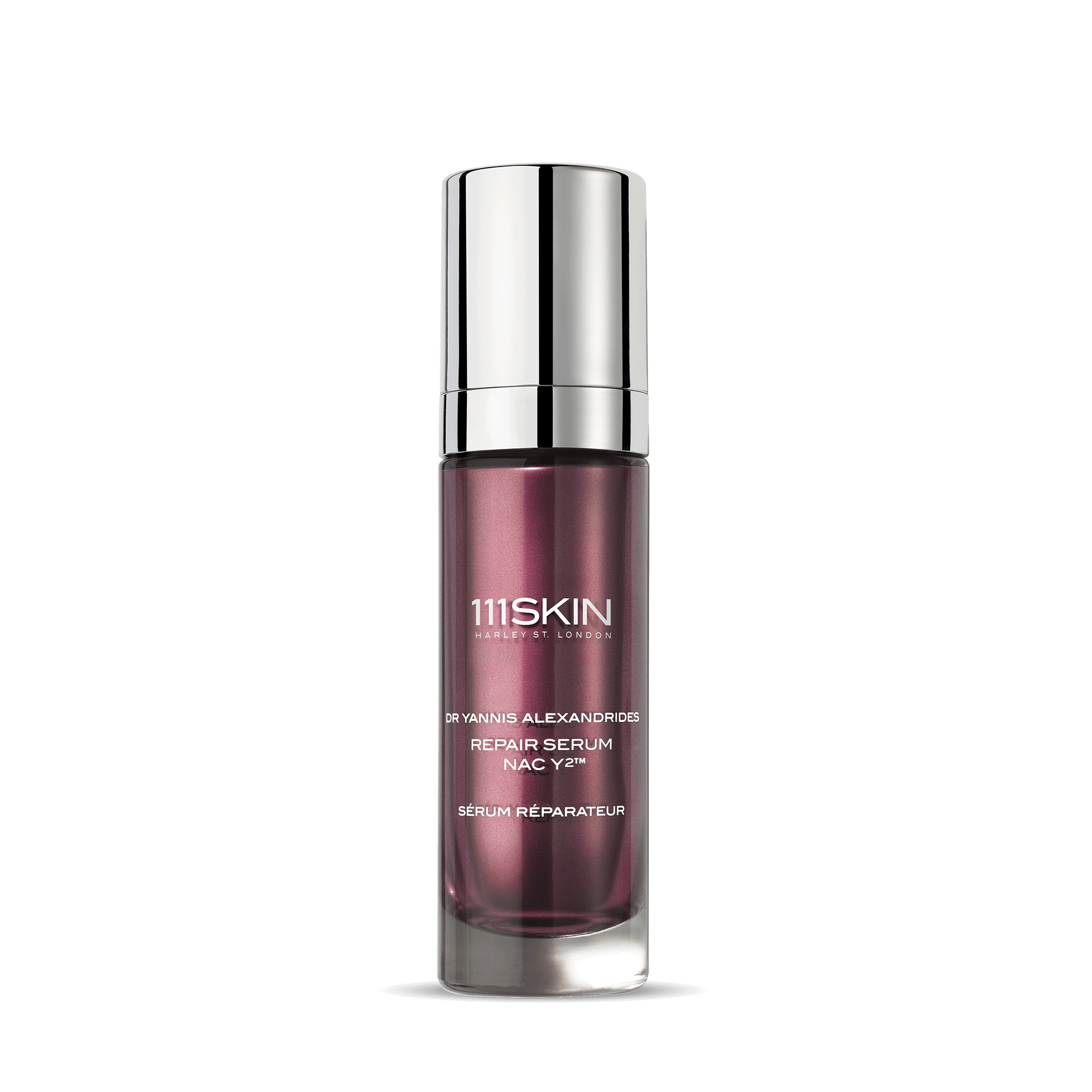
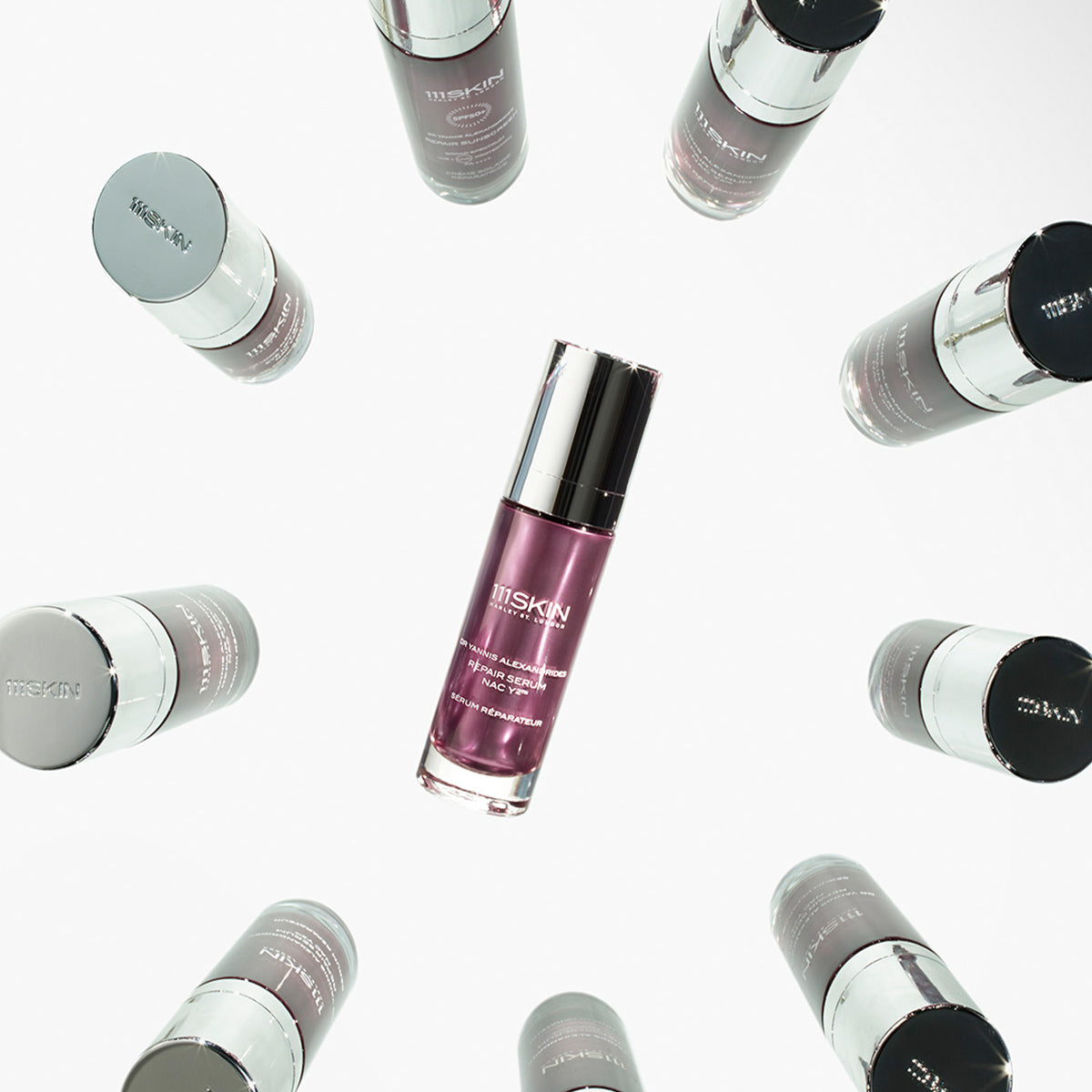
- Apply a hydrating serum. Smooth 1 to 2 pumps of Repair Serum NAC Y²™ onto the face and neck, morning or evening. Its cooling, velvety texture delivers hydration and smoother, plumper-looking skin while addressing visible redness and early signs of ageing.
- Follow with moisturiser. In the morning, apply a pea-sized amount of Repair Day Cream NAC Y²™ to the face, neck and décolletage for nourishing hydration and barrier support. In the evening, use a pea-sized amount of Repair Night Cream NAC Y²™ over the same areas after serum.
- Complete daytime care with sun protection. Apply Repair Sunscreen SPF50+ generously and evenly after moisturiser, 15 to 20 minutes before sun exposure. Follow its exposure and reapplication directions.
See Repair Night Cream NAC Y²™ for the evening moisturiser in step three.
Repair Serum NAC Y²™ received Tatler Best Serum for Repair in the Beauty Awards 2025. Its relevance here is practical: it addresses the hydrated, smoother-looking surface that many people are seeking when they first explore flaxseed oil supplements.
If dryness needs an additional hydration step, Hyaluronic Acid Aqua Booster offers a focused option featuring Hyaluronic Acid and Niacinamide. Shake and pat 2 to 4 drops onto clean, dry skin before serum, morning or evening. This addition belongs before step two, rather than being another layer to fit in at the end.
Match dullness and uneven tone to the right care
A lack of radiance can come from dryness, but distinct dark spots need a different focus. Dark Spot Correcting Serum targets visible dark spots and uneven tone with 2% Tranexamic Acid, 5% seven Swiss Alpine plant extracts and 1% Gluconolactone.
For this concern, use 1 to 2 pumps evenly on the face and neck after cleansing, morning or evening, then follow with moisturising care and daytime SPF. It can serve as the targeted serum choice in the routine above. In 111SKIN's reported clinical trial of 32 participants, hyperpigmentation was reduced by 36% after 56 days.
That is a separate goal from correcting dry-feeling skin. Neither the presence of omega-3s in a supplement nor a general improvement in hydration establishes a dark-spot benefit.
A considered next step for your skin
Flaxseed oil supplements have a plausible nutritional role and preliminary evidence for improving hydration, roughness and sensitivity. Their limits are equally important: they are not established treatments for inflammatory skin conditions, acne, pigmentation or visible ageing, and there is no universal skin dose.
Start by identifying your main concern, reviewing your diet and checking supplement suitability if medication or health circumstances make that necessary. For daily dryness, build a consistent hydration and barrier-supporting routine first. Explore 111SKIN's reparative care or use the skincare quiz to refine that topical choice, while keeping nutritional decisions grounded in your individual needs.
As with any skincare product, patch test before first use. If you are pregnant or breastfeeding, consult your doctor before using any skincare products.
FAQ
Do flaxseed oil supplements help dry skin?
They may help: small human research suggests improvements in hydration, roughness and barrier-related measures. The evidence is limited, so a response is not guaranteed. Gentle cleansing and regular moisturising remain the direct first steps for dry-feeling skin.
How much flaxseed oil should I take for skin?
There is no universally established skin-specific dose. Follow the product label and ask a pharmacist, doctor or registered dietitian whether it suits your diet, medicines and health. Check the ALA amount separately from the total flaxseed oil amount.
Can I apply oil from a flaxseed supplement capsule to my face?
An oral supplement is designed to be swallowed, not assessed as a finished facial skincare formula. Research on taking flaxseed oil does not establish the benefits of applying capsule contents to skin. For topical hydration, choose a product formulated for that purpose.
Can flaxseed oil supplements treat acne or eczema?
There is not enough evidence to recommend them as treatments for acne or eczema. Improvements in hydration or sensitivity do not demonstrate control of either condition. Seek professional advice for persistent breakouts, itching or inflamed skin, and continue prescribed care unless your clinician advises otherwise.