


Table of Contents
- Introduction
- When a puffy red face needs medical attention
- Why your face may look puffy and red
- Reduce avoidable irritation first
- Choose care for residual redness and dryness
- Choose a mask for the cosmetic concern that remains
- A compact routine for comfortable, settled skin
- Recognise patterns without self-diagnosing
- The next step for a puffy red face
- FAQ
Introduction
A puffy red face can reflect temporary irritation, but redness with swelling can also signal an allergic reaction or infection. The first step is to check how quickly it appeared and whether you have pain, fever, itching or other symptoms before reaching for skincare.
Call emergency services immediately if your lips, tongue, mouth or throat suddenly swell, you struggle to breathe or swallow, or you feel faint or confused. Call 999 or 112 in the UK, or your local emergency number elsewhere.
For mild, familiar puffiness without warning signs, gentle handling and a simpler routine can help maintain skin comfort. Understanding the difference between cosmetic puffiness, surface irritation and unexplained swelling helps you choose care appropriately.
When a puffy red face needs medical attention
Signs that need emergency help
Sudden facial swelling can be part of angioedema, which affects deeper tissues and may involve the lips, eyelids or tongue. When swelling affects the airway, or accompanies symptoms of a serious allergic reaction, it needs immediate medical treatment.
Seek emergency help if facial swelling occurs with:
- Sudden swelling of the lips, mouth, tongue or throat.
- Breathing difficulty, wheezing, choking sensations or trouble swallowing.
- Sudden dizziness, confusion, fainting, or blue, grey or unusually pale lips or skin.
A raised, itchy rash may accompany an allergic reaction, but do not wait for a rash before seeking help. If you have a prescribed adrenaline auto-injector for anaphylaxis, use it as directed and call emergency services. Do not drive yourself to hospital.
Changes that need prompt assessment
Seek urgent medical advice for swelling that is sudden, painful, severe, spreading or getting worse. Redness with warmth, tenderness or fever can indicate infection, particularly when one cheek or one side of the face is affected. Swelling near an eye with eye pain or vision changes needs urgent assessment.
Tooth pain with cheek or jaw swelling also needs prompt dental attention. If swelling follows a procedure or injury, contact the treating clinician for guidance instead of assuming a cosmetic mask will address it.
Persistent or recurring swelling deserves a medical appointment even when it is not painful. Sudden facial swelling during pregnancy needs prompt maternity advice, especially with headache or visual disturbance. Skincare can improve surface hydration and appearance, but it cannot identify or treat the cause of unexplained facial swelling.
Why your face may look puffy and red
Puffiness and redness describe different changes
Puffiness describes increased fullness, often associated with fluid in facial tissues. Redness describes a change in colour that can accompany flushing, irritation or inflammation. They may appear together, but improving one does not necessarily resolve the other.
For example, a familiar puffy appearance on waking is different from a cheek that becomes increasingly red, hot and painful. The timing and sensation matter more than how noticeable the change looks in a mirror.
Redness can also be less obvious on brown or black skin. Pay attention to changes from your usual skin tone alongside warmth, tenderness, itching, tightness or swelling. A photograph cannot reliably establish the cause.
Contact irritation and allergic reactions
Skincare, make-up, hair products and other substances that touch the face can cause irritant or allergic contact dermatitis. A reaction may include redness, itching, burning, dryness or swelling. These symptoms overlap, so appearance alone cannot tell you whether a product has irritated your skin or triggered an allergy.
Consider what changed before the symptoms began. A new exfoliant, several newly introduced products, hair dye or repeated rubbing may be relevant. A product used comfortably in the past can also become part of the history, so do not limit your notes to recent purchases.
If a product causes irritation, stop using it. Do not repeatedly reapply it to see whether your skin will adapt, and avoid testing several alternatives on an actively irritated face. Persistent irritation or swelling requires professional advice.
Flushing, sun exposure and recurring skin conditions
Heat, exercise and alcohol can trigger facial flushing in some people. Sunburn can cause redness, tenderness and, when more severe, swelling. Move out of the sun and seek medical advice for significant swelling, blistering or feeling unwell.
Recurring flushing, persistent central facial redness, sensitivity or bumps can occur with rosacea. Other skin conditions can also cause red, uncomfortable patches. A dermatologist can distinguish these patterns and recommend treatment; a cosmetic serum should not be presented as treatment for rosacea or dermatitis.
Mild morning puffiness may accompany poor sleep or a familiar pattern of temporary fluid retention. However, pronounced redness, pain or worsening swelling should not be explained away as a late night or a salty meal.
Reduce avoidable irritation first
Keep cooling gentle
For mild symptoms without warning signs, a clean, cool, damp cloth can provide comfort. Rest it lightly against the skin without rubbing or pressing. Avoid placing ice directly on the face, especially when the skin already feels sensitive.
Step away from a hot shower, sauna or other obvious heat exposure if warmth makes your face flush. Comfortable cooling is the aim; an intensely cold sensation is unnecessary. Stop if cooling causes discomfort.
Keeping your head slightly raised when resting may help mild puffiness. This is a comfort measure, not a reason to delay assessment for unexplained or worsening swelling.
Cleanse with less friction
Repeated washing, vigorous massage and rough cloths can add irritation when the face feels tight or looks red. Use gentle movements and warm rather than hot water, then pat dry. Skin should not feel scrubbed or polished after cleansing.
Once skin is comfortable and you are maintaining a familiar routine, 111SKIN Cleansing Oil removes make-up and impurities while leaving skin softer. With dry hands, apply 2 to 3 pumps to dry skin, massage for 30 seconds, rinse with warm water and pat dry. It can be used alone or as the first step in a double cleanse.
If you suspect a cleanser is contributing to a reaction, stop using it rather than increasing cleansing to remove the redness. During active swelling or a rash, seek advice before introducing a new formula.
Avoid trying to massage swelling away
Firm facial massage, scraping tools and repeated pressure are poor choices for a red, tender or unexplained swollen face. They can add friction and make it harder to judge whether symptoms are progressing. Leave affected skin alone while you establish what is happening.
Also resist the urge to exfoliate away roughness during irritation. Flaking and tightness are reasons to reassess the routine, not signals that the skin needs a stronger treatment. A clinician can advise when to resume active products if you have developed dermatitis or another skin condition.
A useful first checkpoint: make the skin more comfortable through gentle handling, then reassess. Increasing heat, pain, spreading redness or swelling calls for medical advice, not another skincare step.
Choose care for residual redness and dryness
Cosmetic care becomes relevant when urgent causes have been excluded and the concern is mild visible redness, dryness or a familiar tired-looking appearance. Apply products to intact skin that feels comfortable, and introduce changes gradually so you can recognise how your skin responds.
111SKIN was founded by plastic and reconstructive surgeon Dr Yannis Alexandrides and Eva Alexandridis. Drawing on his practice at 111 Harley St. in London, the brand combines clinical inspiration with considered textures and at-home rituals. For this concern, that approach means selecting hydration and barrier support without treating every red face as the same problem.
A serum for visible redness and hydration
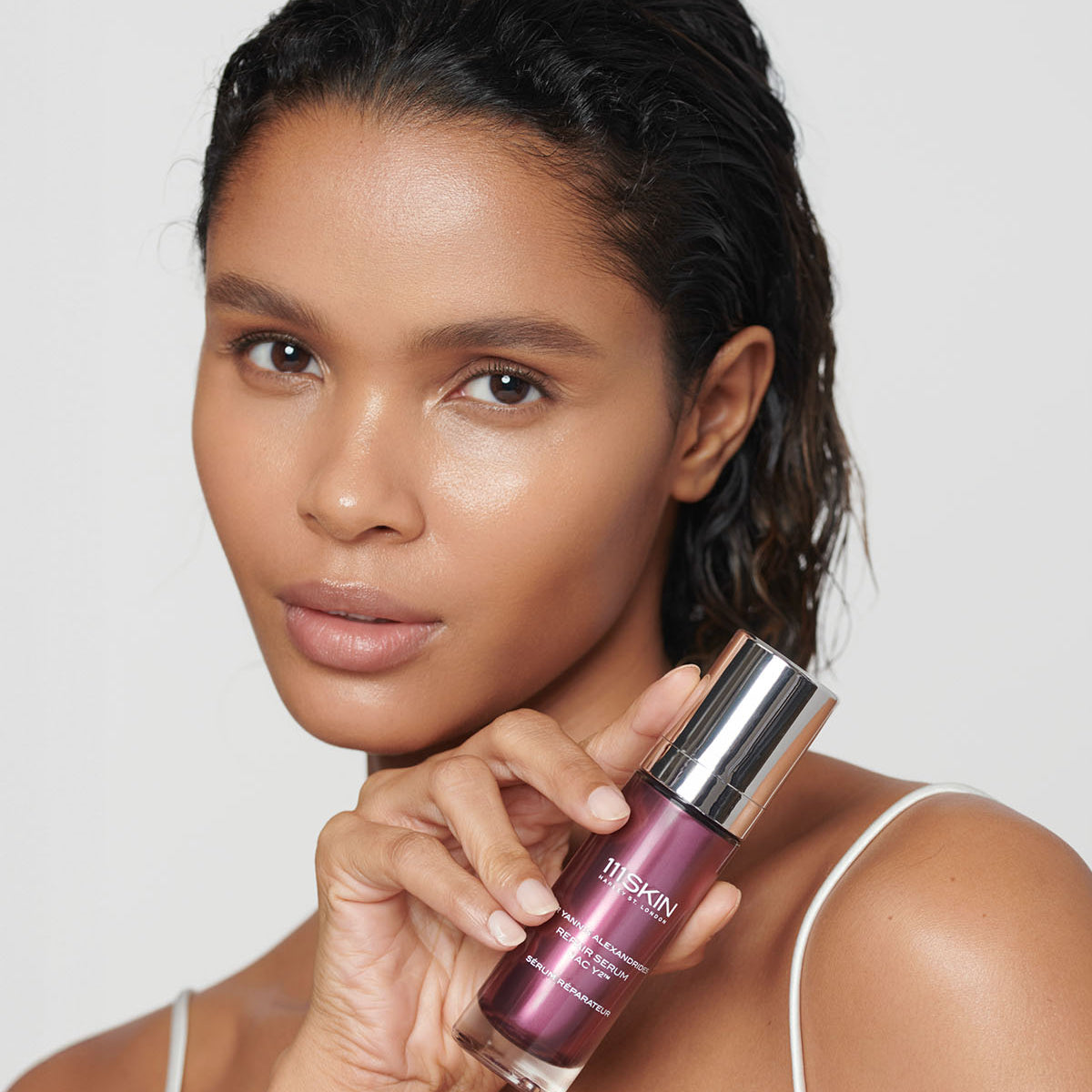
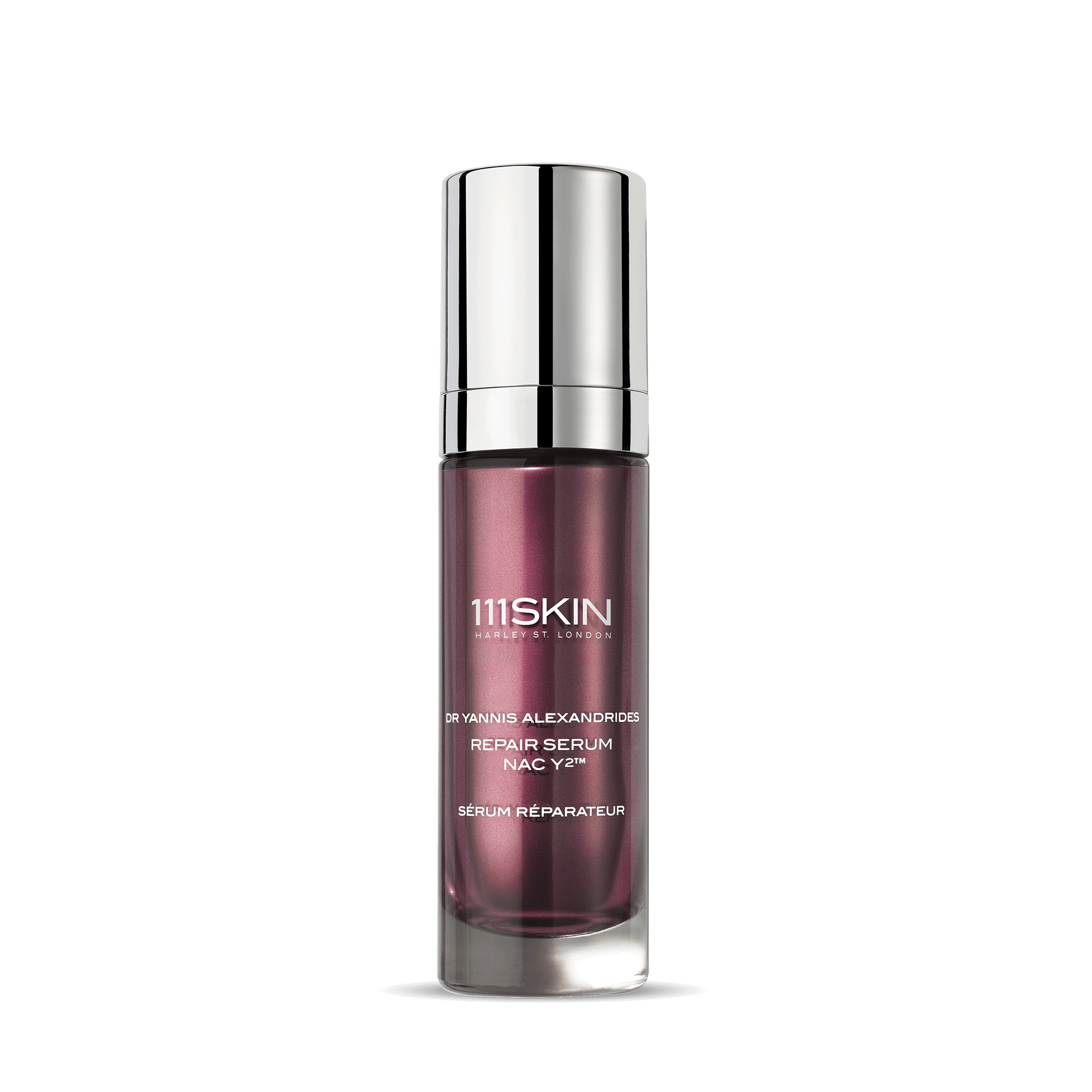
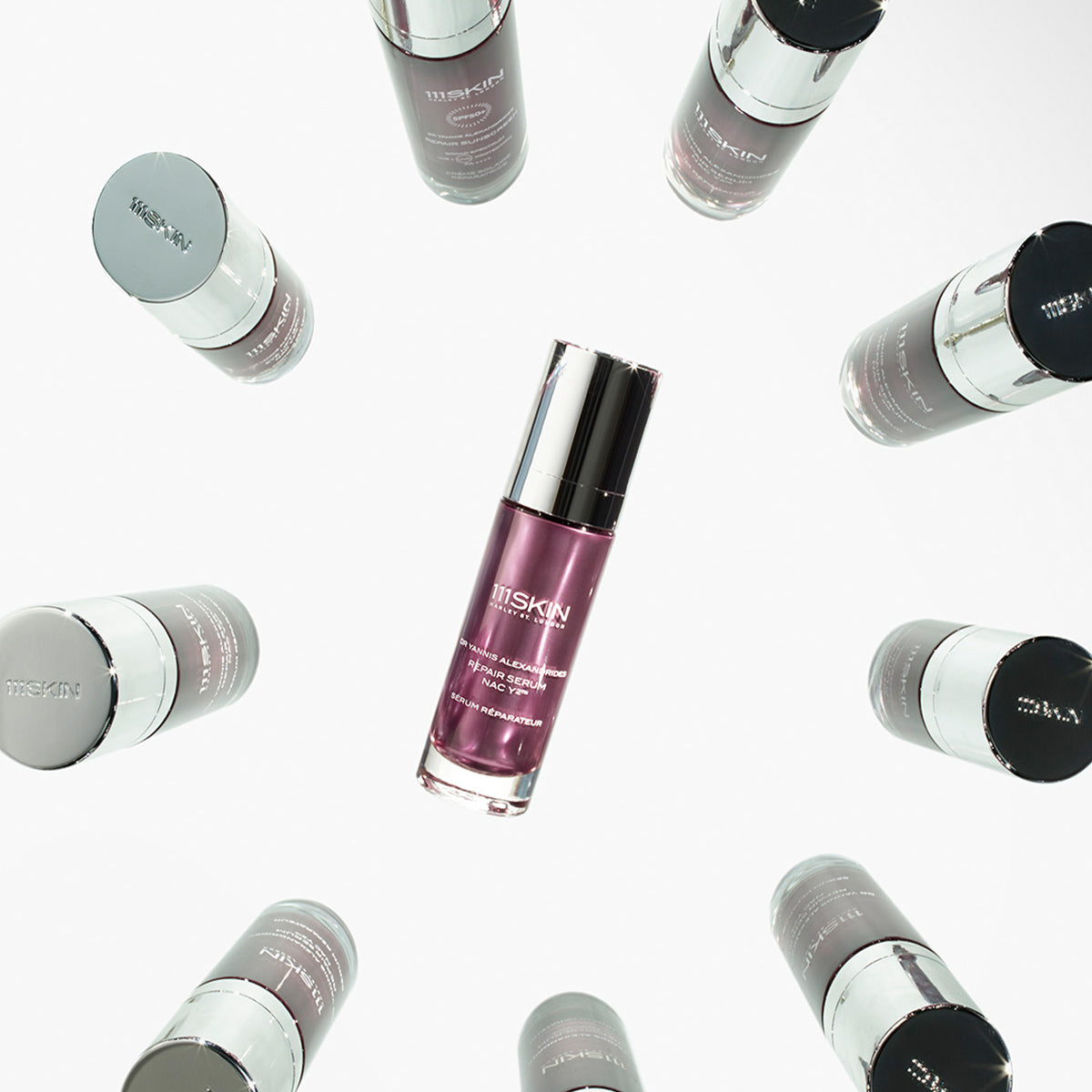
Repair Serum NAC Y²™ addresses hydration, visible redness and early signs of ageing, leaving skin smoother and plumper-looking. Its cooling, velvety texture offers a comfortable application experience, while the formula features NAC Y²™, Pink Rock Rose Extract and Centella Asiatica.
It is a relevant choice when surface dryness and visible redness remain after an episode has settled, or when these are familiar cosmetic concerns. Its benefits are distinct from treating an allergic reaction, infection or diagnosed inflammatory condition.
Repair Serum NAC Y²™ received Tatler Best Serum for Repair at the Beauty Awards 2025. Apply 1 to 2 pumps to the face and neck after cleansing, morning or evening, before moisturiser.
Moisturiser for a dry, tight-feeling surface
Dry skin can feel tight and show fine surface lines more clearly, even when the face also looks puffy. Puffiness does not mean the outer skin surface has all the moisture it needs. Likewise, a hydrated, plumper-looking finish is different from unwanted swelling.
Humectants attract water, emollients soften the skin, and moisture-loss-limiting ingredients help retain hydration. These roles explain why a hydrating serum and a moisturiser can complement one another without performing identical jobs.
Repair Day Cream NAC Y²™ provides nourishing hydration and skin-barrier support. Repair Night Cream NAC Y²™ supplies replenishing evening moisturisation. These are practical choices for supporting a comfortable surface, with application quantities set out in the routine below.
When extra hydration is the priority
Hyaluronic Acid Aqua Booster is a hydration-focused option featuring Hyaluronic Acid and Niacinamide. It suits a routine where dryness is the main unresolved concern, rather than unexplained swelling.
Shake the bottle and pat 2 to 4 drops onto clean, dry skin before serum, morning or evening. Its directions also permit mixing with serum or moisturiser, but using it as a separate step makes its placement straightforward.
There is no need to introduce a booster, serum and new cream simultaneously when you are working out what your skin tolerates. Start with a comfortable foundation and add targeted hydration only where it answers a clear need.
Choose a mask for the cosmetic concern that remains
A removable mask can provide focused hydration or improve the appearance of familiar puffiness once skin is settled. Do not apply a new mask over an active rash, painful swelling or skin that burns on contact. The useful distinction is between a dry, stressed-looking surface and a puffy, tired-looking face.
For hydration and visibly stressed skin
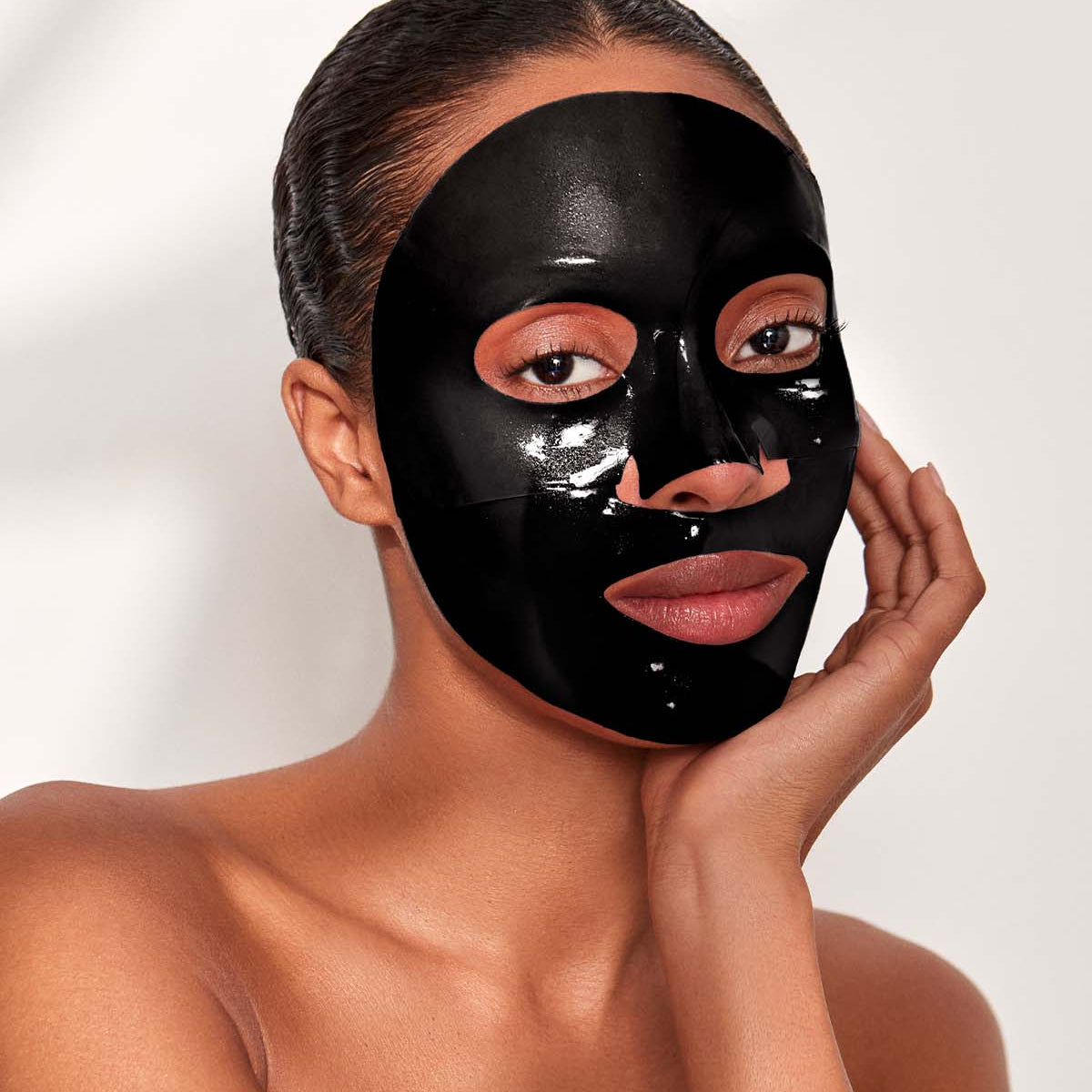
Y Theorem Bio Cellulose Facial Mask is designed for hydration and visibly stressed skin. Its biocellulose material provides close contact with facial contours, and the formula features NAC Y²™, Ectoin and Centella Asiatica.
This is the more relevant direction when the main observation is a dry, uncomfortable-looking surface and a need for hydration. It does not replace assessment of recurrent redness or treat contact dermatitis. Follow the directions for removing its protective gauze before application.
For a puffy, tired-looking appearance
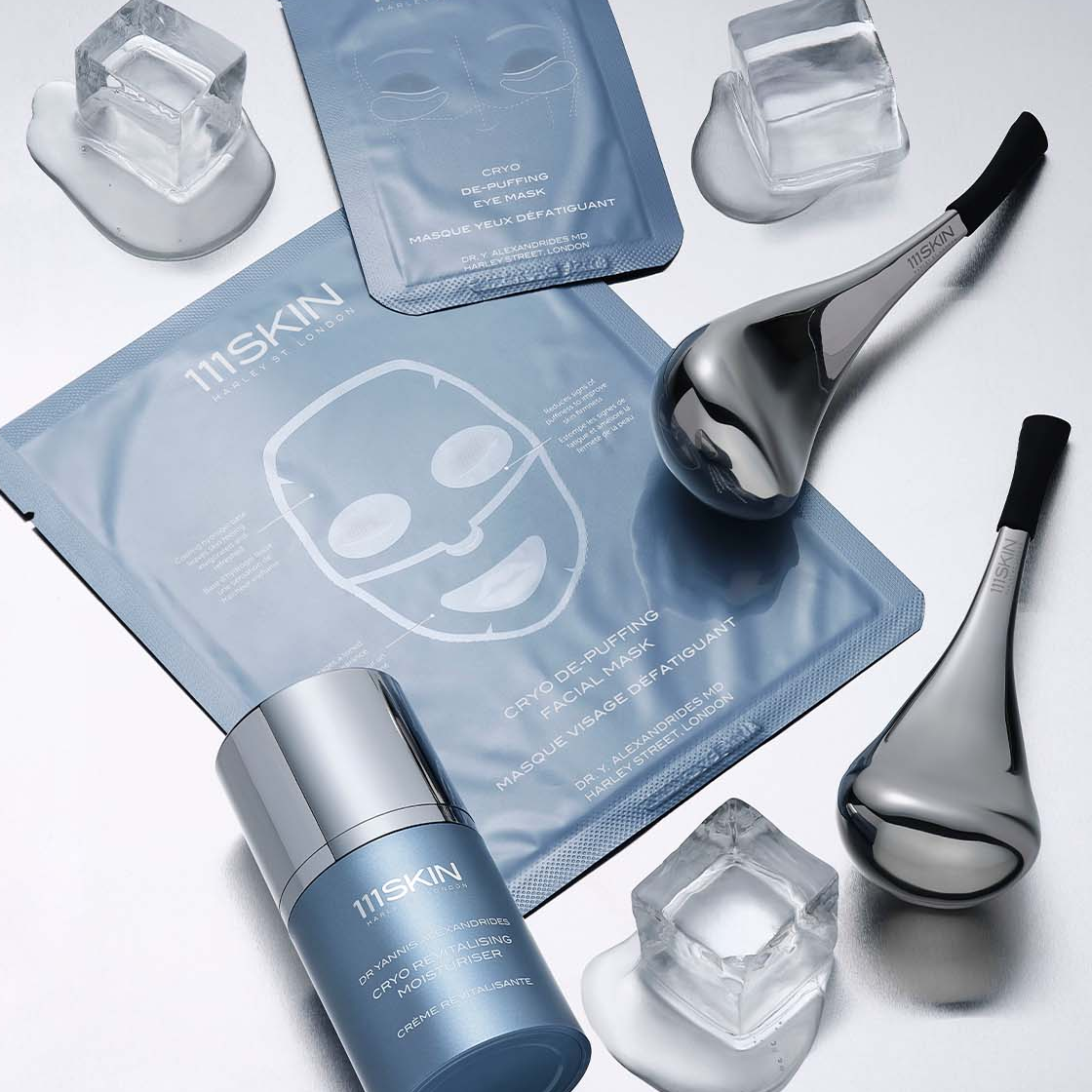
Cryo De-Puffing Facial Mask is a two-piece hydrogel mask for visibly puffy, tired-looking skin. Caffeine and peptides are featured, making this a targeted choice when cosmetic puffiness is the primary concern and the skin otherwise feels comfortable.
The mask may be refrigerated before use. That cooling option belongs to this mask; it is not a general instruction to refrigerate skincare creams or gels.
For either facial mask, apply to clean, dry skin after cleansing, morning or evening. Wear for 20 minutes, remove, then continue with subsequent leave-on skincare. These are removable treatments, not overnight masks, and they do not require a universal weekly schedule.
A compact routine for comfortable, settled skin
Once the face is no longer actively reacting and medical concerns have been addressed, a consistent routine is more useful than repeatedly switching products. Keep the sequence simple enough to identify any product that causes discomfort.
- Cleanse gently. Use a cleanser you tolerate. For Cleansing Oil, use the dry-skin method described above, then pat dry.
- Add a targeted treatment when needed. A removable facial mask belongs here, before leave-on skincare. If additional hydration is the priority, Hyaluronic Acid Aqua Booster goes before serum.
- Apply serum. Use 1 to 2 pumps of Repair Serum NAC Y²™ across the face and neck.
- Moisturise. In the morning, apply a pea-sized amount of Repair Day Cream NAC Y²™ to the face, neck and décolletage. In the evening, use a pea-sized amount of Repair Night Cream NAC Y²™ over the same areas after serum.
- Finish daytime care with sun protection. Apply Repair Sunscreen SPF50+ generously and evenly after moisturiser, 15 to 20 minutes before sun exposure. Follow its exposure and reapplication instructions.
Daily sun protection matters because UV exposure can add to redness and damage skin. Shade and protective clothing remain useful alongside sunscreen. If your usual sunscreen stings irritated skin, seek advice about a suitable alternative instead of repeatedly applying a product that hurts.
The completion cue is comfortable skin, not a particular level of shine or a sensation of activity. Stop any product that causes irritation. Persistent stinging, itching or renewed swelling warrants reassessment.
Recognise patterns without self-diagnosing
Record changes that help a clinician
If puffiness and redness recur, a brief record can reveal useful patterns and make a consultation more productive. Record observations rather than deciding in advance that the cause is allergy, fluid retention or a particular ingredient.
Useful details include:
- Timing: when symptoms began, how quickly they developed and whether they improve or worsen through the day.
- Location: both cheeks, one side, eyelids, lips or another specific area.
- Sensation: itching, burning, tenderness, warmth or pain.
- Recent exposures: skincare, make-up, hair products, medicines, foods, sun, heat or a procedure.
- Associated symptoms: rash, fever, tooth pain, eye discomfort or feeling unwell.
Photographs taken in similar lighting can help show changes over time. Bring your product and medication details to the appointment, but do not stop prescribed medication without medical advice. If symptoms become urgent, seek help immediately instead of continuing to monitor them.
Keep everyday expectations realistic
Sleep, normal hydration and avoiding personal flushing triggers can support general wellbeing, but none is a reliable treatment for unexplained facial swelling. Drinking excessive water does not provide a predictable way to "flush out" a puffy face.
Similarly, a de-puffing mask can improve a tired-looking appearance without permanently changing facial anatomy. A hydrating serum can smooth the surface and address visible redness without resolving every cause of redness. Understanding these separate outcomes makes it easier to judge whether your routine is meeting the right goal.
When skin is settled, introduce one new product at a time and observe comfort as well as appearance. If redness repeatedly returns despite a gentle routine, professional assessment is more useful than escalating to stronger skincare.
Judge progress by comfort and a return towards your usual appearance. A smoother surface is a cosmetic benefit; recurrent swelling still deserves an explanation.
The next step for a puffy red face
Start with the symptoms that change the decision: speed of onset, pain, warmth, fever, itching and any airway involvement. New or worsening swelling needs medical attention; mild, familiar cosmetic puffiness can be approached with gentle handling and focused care once the skin is comfortable.
For residual visible redness and dryness, Repair Serum NAC Y²™ with appropriate moisturising care offers a clear starting point. Choose Y Theorem Bio Cellulose Facial Mask when hydration is the priority, or Cryo De-Puffing Facial Mask for a settled but puffy, tired-looking appearance. If you need help refining a routine after medical concerns have been addressed, the 111SKIN skincare quiz can help organise your cosmetic priorities.
As with any skincare product, patch test before first use. If you are pregnant or breastfeeding, consult your doctor before using any skincare products.
FAQ
Why is my face suddenly puffy and red?
Sudden puffiness and redness can occur with an allergic reaction, contact irritation, infection or other causes that require assessment. Seek prompt medical advice for new unexplained swelling, especially if it is painful or worsening. Sudden lip, tongue, mouth or throat swelling, breathing difficulty or faintness requires emergency help.
What can I do at home for mild facial puffiness?
For mild, familiar puffiness without warning signs, try a clean, cool, damp cloth and keep your head slightly raised when resting. Avoid rubbing, firm massage and direct ice contact. Seek advice if the puffiness persists, recurs or develops pain, warmth or increasing redness.
Can skincare help a red, puffy face?
Skincare can improve hydration, visible redness and the appearance of cosmetic puffiness when skin is settled and comfortable. Repair Serum NAC Y²™ addresses hydration and visible redness, while Cryo De-Puffing Facial Mask targets a puffy, tired-looking appearance. Neither treats an allergic reaction, infection or unexplained swelling.
Should I use a face mask when my skin is red?
Avoid introducing a mask during an active rash, painful swelling or burning irritation. Once skin is comfortable, select a mask for the remaining cosmetic concern and follow its directions. Y Theorem Bio Cellulose Facial Mask focuses on hydration and visibly stressed skin, while Cryo De-Puffing Facial Mask addresses visible puffiness.