


Table of Contents
- Introduction
- What double cleansing does for your skin
- When a double cleanse is worth doing
- How to double cleanse correctly
- Choose cleanser textures around skin comfort
- What to apply after double cleansing
- Troubleshooting your double cleanse
- A double cleanse that earns its place
- FAQ
Introduction
A double cleanse skincare routine uses an oil-based cleanser first, followed by a gentle water-based cleanser, to remove make-up, sunscreen and remaining surface residue. It is particularly useful in the evening after long-wear make-up or water-resistant sunscreen, when one quick wash can leave product behind.
The aim is thorough removal with a comfortable finish. Skin should feel clean and soft, without tightness, stinging or a need to scrub. The right routine combines complementary cleanser textures, careful rinsing and replenishing leave-on care. Just as importantly, it gives you a clear way to decide when two cleansing steps serve your skin and when one is enough.
What double cleansing does for your skin
The first cleanse loosens persistent product
Make-up and sunscreen are designed to stay on the skin. Long-wear foundation, for example, needs to resist movement and moisture during the day. These qualities are useful while wearing it, but can make removal with water alone difficult.
An oil-based cleanser helps loosen oily surface material and cosmetic films so they can be rinsed away. A formulated cleansing oil also contains cleansing components that allow the oil to disperse with water. This is why a rinse-off cleansing oil behaves differently from an ordinary facial oil.
111SKIN Cleansing Oil emulsifies for the removal of make-up and impurities while leaving skin softer. Its fluid texture spreads readily under the fingertips, allowing gentle massage instead of repeated rubbing. It can be used alone or as the first step in a double cleanse.
The second cleanse finishes surface cleansing
A gentle water-based cleanser follows to wash away remaining residue, sweat and everyday dirt. Depending on the formula, this may be a gel, cream, lotion or foam. It does not need to create a large lather to cleanse effectively.
The two steps have overlapping cleansing abilities. Their value lies in dividing the task: the first loosens persistent product, while the second completes the wash. This can be more comfortable than trying to remove everything with a strong cleanser and vigorous friction.
There is no need to seek a squeaky finish. That sensation can accompany excessive removal of surface oils, particularly when combined with hot water or repeated washing. Softness after rinsing is compatible with clean skin.
What benefits can you reasonably expect?
The clearest benefit is more thorough removal on evenings when make-up or sunscreen is difficult to wash away. This leaves a clean surface for serum and moisturiser, without asking those products to spread over leftover foundation or cleansing residue.
Removing residue can also help skin look fresher, but double cleansing is not an exfoliating treatment, a wrinkle treatment or a guaranteed solution for breakouts. It does not permanently shrink pores or draw impurities from deep within the skin. For concerns such as persistent blemishes or uneven tone, cleansing provides the foundation for more targeted care.
111SKIN's approach draws on the practice of plastic and reconstructive surgeon Dr Yannis Alexandrides at 111 Harley St. in London. Founded by Dr Yannis and Eva Alexandridis, the brand brings clinical inspiration to considered at-home rituals, including the essential balance between effective cleansing and skin comfort.
When a double cleanse is worth doing
Match the routine to what you have worn
The strongest reason to double cleanse is what needs removing, not a rule attached to your skin type. A dry complexion wearing long-wear foundation may benefit from two gentle steps. An oily complexion without persistent product on the surface may be adequately cleansed in one.
Consider a double cleanse on evenings when you have worn:
- Long-wear foundation, concealer or several layers of complexion make-up.
- Water-resistant sunscreen, particularly after swimming or repeated application.
- A combination of sunscreen and make-up that your usual single cleanse leaves behind.
Sunscreen use does not automatically mean two cleansers are necessary. Many formulations can be removed with one suitable cleanser used properly. Look at how well your cleanser removes the products you actually wear before adding another step.
Visible make-up around the hairline or jaw after washing is a useful clue that your removal method needs attention. It may call for better coverage and rinsing, a more suitable first cleanser, or a second cleanse. Increasing pressure is rarely the most helpful response.
How often should you double cleanse?
Evening is usually the most useful time, because that is when you remove the day's sunscreen and make-up. If you wear persistent products daily and your skin stays comfortable, an evening double cleanse can become a regular routine. If those products are occasional, the second cleansing step can be occasional too.
Morning cleansing has a different job. You are generally dealing with overnight skincare, sweat and surface oil, so one gentle cleanse or a rinse may be sufficient, depending on your skin and the products used.
You can also move between one and two steps across the week. A routine should respond to changes in make-up, sunscreen, weather and skin comfort. There is no benefit in maintaining the same number of washes when the removal task has changed.
Base the second cleanse on what remains to be removed. The best finish is skin that feels clean and comfortable, not skin that feels scrubbed bare.
How to double cleanse correctly
Step-by-step evening method
Set out your cleansers and a clean, soft towel before starting. Keep the water comfortably warm, rather than hot. Gentle fingertip contact is enough for both stages.
-
Begin with dry hands and dry skin. Apply 2 to 3 pumps of 111SKIN Cleansing Oil. Starting dry allows the oil to spread across the make-up and other surface material you want to remove.
-
Massage gently for 30 seconds. Distribute the cleanser evenly with your fingertips. Include the edges of the face where complexion make-up often remains, such as the jawline and near the hairline, without dragging the skin.
-
Rinse away the first cleanse. Use warm water, allowing the cleansing oil to emulsify and wash away. Rinse carefully around the nose, jaw and facial edges, then pat dry as directed for Cleansing Oil.
-
Apply your gentle water-based cleanser. Follow its own quantity and application instructions. If it is designed for damp skin, dampen your face again before applying it. Spread it gently across the areas being cleansed; there is no universal massage time that applies to every formula.
-
Rinse and gently pat dry. Remove the second cleanser thoroughly with warm water, then use your soft towel without rubbing. Continue with your leave-on skincare according to each product's directions.
The first cleanser should be rinsed away before the second is applied. Mixing both cleansers together turns two distinct removal stages into one mixture and makes it harder to tell whether the first product has been removed properly.
Why rinsing matters as much as massage
Massage distributes cleanser and helps loosen cosmetic films. Rinsing carries away the cleanser and the material it has lifted. Spending longer massaging while rushing the rinse can leave an unsatisfactory finish even when the cleanser itself is suitable.
With an emulsifying cleansing oil, water helps the oily phase disperse so it can rinse away. You do not need to prolong the massage to extract particles from the skin. Follow the product's timing and let the rinse complete the removal.
Pay attention to areas that water can miss, including beside the nostrils and beneath the jaw. If you wash in the shower, avoid placing your face directly under a hot stream. A comfortable water temperature makes the routine easier on dry or sensitive-feeling skin.
Treat eye make-up removal as a specific task
A facial cleanser's suitability for eye make-up removal depends on its own directions. Do not assume that every cleansing oil can be massaged over the eyelids or used to remove waterproof mascara.
For persistent eye make-up, use a remover specifically intended for that area and follow its instructions. Allow it to loosen the product before gentle removal, keeping direct eye contact to a minimum. Repeated rubbing at the lash line can irritate the delicate surrounding skin.
Likewise, do not extend facial cleansing into a prolonged eye massage. The goal is to remove make-up without pulling, then continue with the rest of the face.
Choose cleanser textures around skin comfort
Dry or sensitive-feeling skin
Dry skin needs careful attention to the total cleansing load. Two mild products can still feel excessive if used too often, especially alongside hot water, abrasive cloths or exfoliating treatments. A comfortable first cleanse does not cancel out a drying second one.
For the second stage, look for a gentle, hydrating cleanser, with fragrance-free options particularly useful if fragrance tends to irritate your skin. Cream and lotion textures often appeal to dry complexions, although the finished formula matters more than its name.
If your skin is already sore, cracked or persistently inflamed, simplify cleansing and seek professional advice rather than experimenting with additional washes. People managing eczema or rosacea may need a more individual cleansing approach.
Oily, combination or blemish-prone skin
An oily complexion still needs its protective surface lipids. Removing every trace of oil is not the objective, and a strong lather is not proof of a better cleanse. A mild gel or gentle foam can provide a fresh finish without the need for scrubbing.
A rinse-off cleansing oil is also different from leaving a facial oil on the skin. Nevertheless, individual formulas suit different people, so introduce a new cleanser carefully and observe how your skin responds. Neither the word "oil" nor an oil-free label predicts every person's experience.
For combination skin, judge the result across the whole face. A routine that leaves the forehead fresh but the cheeks tight needs adjusting. Avoid repeatedly washing the T-zone to achieve the same sensation everywhere.
Blemish-prone skin may benefit from reliable make-up removal, but double cleansing does not treat the multiple causes of acne. Persistent or painful breakouts deserve targeted advice, not a progressively stronger cleansing routine.
Choose the whole formula, not just the foam level
Texture can guide preference, but it should not become a rigid rule. Some foaming cleansers are gentle, while some rich-feeling formulas may not suit a particular complexion. Look for clear directions, compatibility with your skin and a comfortable result after rinsing.
For a straightforward double cleanse, a gentle second cleanser is a useful starting point. This keeps cleansing focused on removal and leaves targeted concerns to appropriately chosen leave-on treatments. You can then judge each part of the routine more clearly.
Explore the 111SKIN cleansers collection for available options.
What to apply after double cleansing
Cleansing removes material from the skin; the next products restore comfort and provide ongoing cosmetic care. Humectants attract water, emollients soften the skin, and moisture-loss-limiting ingredients help retain hydration. These roles complement one another, which explains why a hydrating serum and moisturiser can work well together.
Keep the post-cleanse routine focused. The following evening sequence offers hydration, smoothing and replenishment without adding unnecessary treatment steps:
- Prepare, if you enjoy an essence. Press 5 to 7 drops of Antioxidant Essence NAC Y²™ onto freshly cleansed skin. This is a hydrating preparation step, not another cleanser, so it stays on the skin.
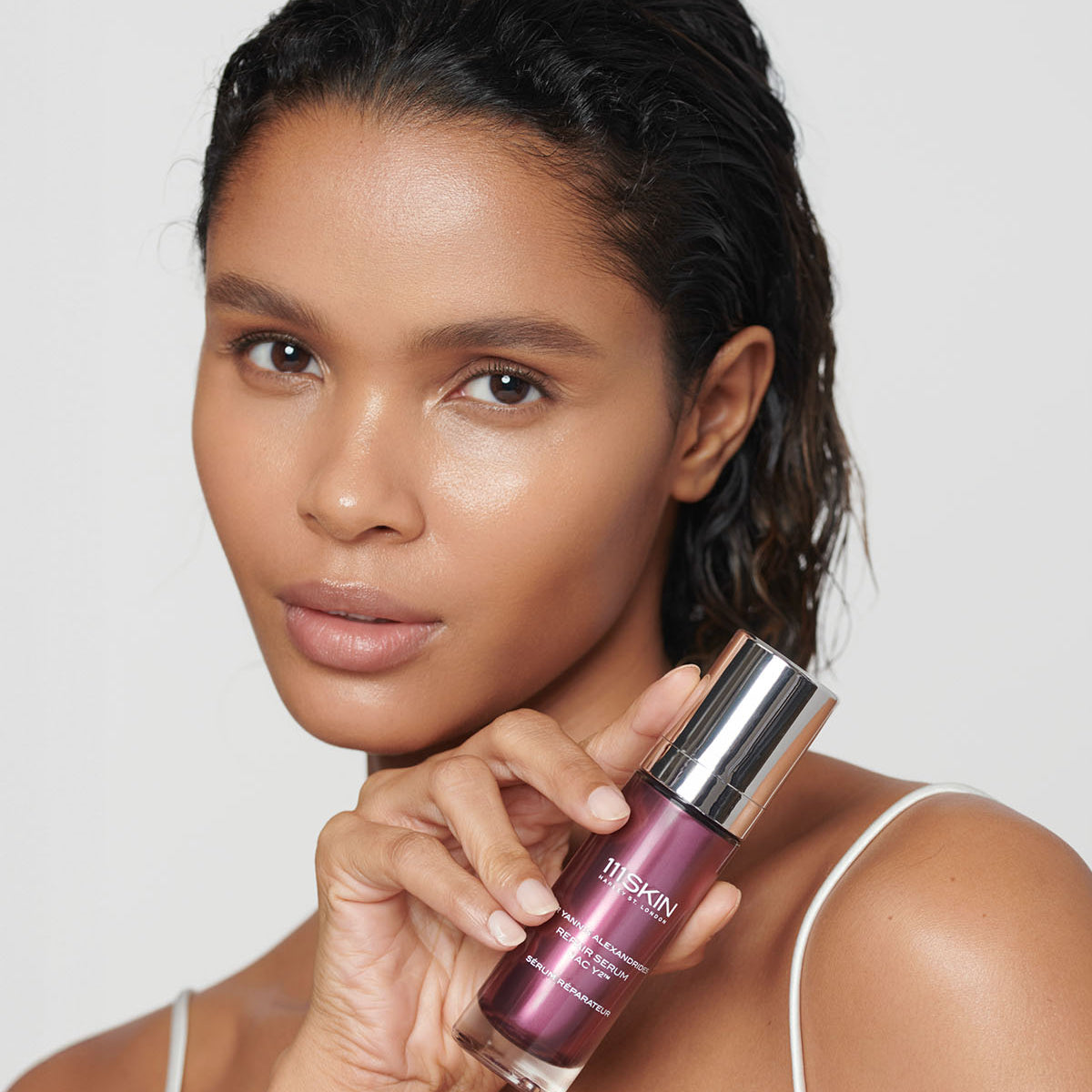
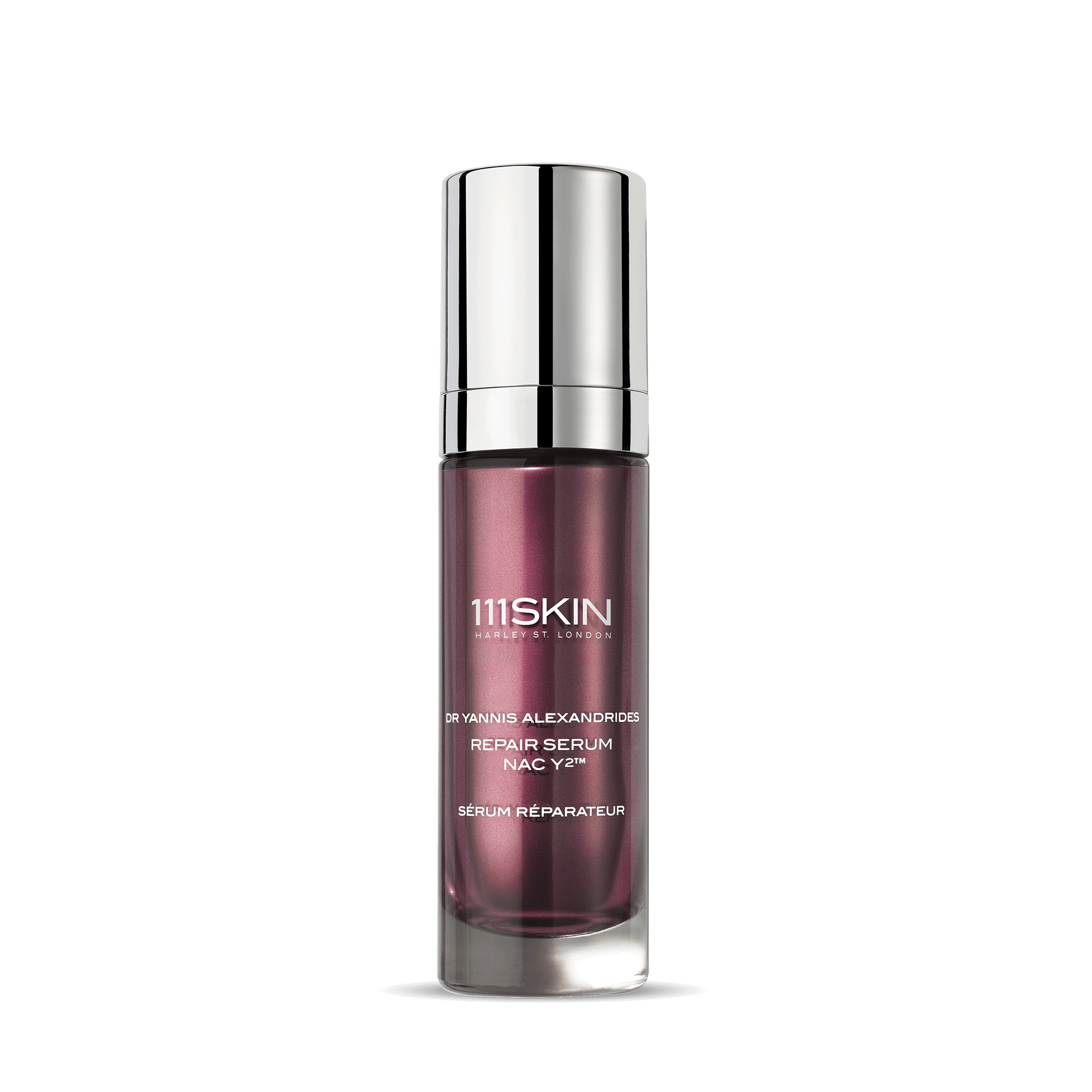
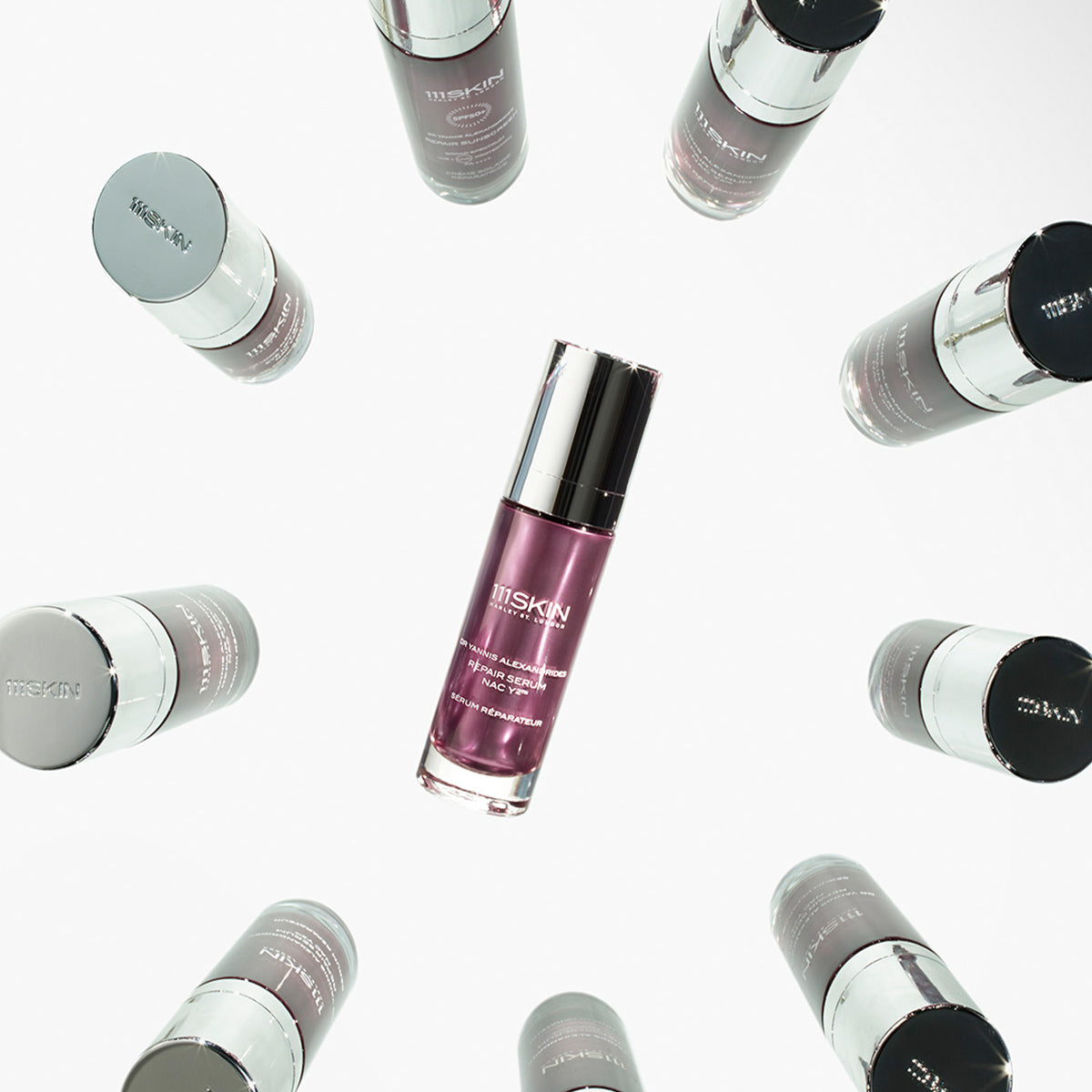
- Apply serum. Smooth 1 to 2 pumps of Repair Serum NAC Y²™ over the face and neck before moisturiser. Its cooling, velvety texture provides hydration and supports smoother, plumper-looking skin while addressing visible redness and early signs of ageing.
- Finish with moisturiser. Apply a pea-sized amount of Repair Night Cream NAC Y²™ to the face, neck and décolletage after serum for replenishing evening care.
The essence is an additional preparation step; serum and moisturiser provide the core leave-on care in this routine. Repair Serum NAC Y²™, which features NAC Y²™, Pink Rock Rose Extract and Centella Asiatica, received Tatler Best Serum for Repair at the Beauty Awards 2025.
Apply leave-on products according to their own skin-preparation instructions. There is no need for a universal waiting interval after cleansing, but products that specify clean, dry skin should be applied that way.
The following morning, keep cleansing gentle and continue with daytime hydration and sun protection. Repair Day Cream NAC Y²™ provides nourishing hydration and skin-barrier support. Apply a pea-sized amount to the face, neck and décolletage after serum.
Follow with Repair Sunscreen SPF50+, applied generously and evenly after moisturiser, 15 to 20 minutes before sun exposure. Follow its exposure and reapplication instructions. Do not reduce daytime sun protection to make evening cleansing easier; refine the removal routine instead.
Troubleshooting your double cleanse
Skin feels tight or stings afterwards
Tightness, stinging and increasing flakiness are reasons to reassess the routine. Review both cleanser formulas, the water temperature, how much pressure you use and how often you wash. More than one factor can contribute.
Reduce to a gentle single cleanse while keeping leave-on care simple and moisturising. Stop using a product if irritation occurs. Persistent irritation, especially when even water or familiar products sting, warrants professional advice.
A comfortable cleanse leaves room for the rest of your routine. Serum and moisturiser should not have to compensate for an unnecessarily harsh wash.
Make-up still appears on the towel
Check technique before adding more cleansing stages. Commonly missed areas include the hairline, sides of the nose and jaw, particularly when make-up has been blended beyond the centre of the face.
Make sure you use the cleanser's directed quantity and cover the full area evenly. With 111SKIN Cleansing Oil, the 2 to 3 pumps and 30-second massage provide a clear method to follow. Then give rinsing the same attention as application.
If a particular cosmetic remains difficult to remove, check whether it needs a dedicated remover. Repeating the entire facial wash several times can expose the rest of the skin to unnecessary cleansing.
Skin feels coated, or new blemishes appear
A coated sensation can reflect incomplete rinsing, remaining make-up or a formula that does not suit your preferences. Review rinsing and the second cleanser before concluding that all cleansing oils are unsuitable. Remember that softness itself is not evidence of residue.
If new blemishes appear after introducing a cleanser, avoid adding several corrective products at once. Simplify the routine so you can identify what has changed. Do not assume that worsening breakouts are a necessary cleansing "purge" that you must tolerate.
A double cleanse that earns its place
An effective double cleanse skincare routine starts with the removal task: loosen persistent make-up and sunscreen with an appropriate first cleanser, rinse thoroughly, then complete cleansing with a gentle water-based formula. With 111SKIN Cleansing Oil, use 2 to 3 pumps on dry hands and dry skin, massage for 30 seconds and rinse with warm water.
Keep two steps for the evenings when they improve removal, and judge success by both cleanliness and comfort. Follow with hydrating, replenishing care so the routine finishes with soft, cared-for skin.
As with any skincare product, patch test before first use. If you are pregnant or breastfeeding, consult your doctor before using any skincare products.
FAQ
Do I need to double cleanse if I only wear sunscreen?
Not always. A single suitable cleanser may remove your sunscreen adequately, while water-resistant formulas or repeated layers can make a double cleanse useful. Assess removal and skin comfort rather than assuming that every sunscreen requires two washes.
Can I use the same cleanser twice?
Two passes with one cleanser are possible, but they do not offer the complementary textures of an oil-based cleanser followed by a water-based one. If one thorough cleanse already removes your products, repeating it may simply add unnecessary washing. For persistent make-up, consider whether a dedicated first cleanser would serve you better.
Should I double cleanse every morning and evening?
For most people, double cleansing is most useful in the evening after sunscreen and make-up. A single gentle morning cleanse or rinse is usually sufficient, depending on your skin and overnight products. Reduce cleansing if your skin becomes tight, dry or irritated.
Does double cleansing remove blackheads?
Double cleansing removes surface make-up, sunscreen and other residue, but it does not reliably clear established blackheads. Prolonged massage, squeezing and scrubbing can irritate the skin without resolving the underlying concern. Persistent blackheads are better addressed with suitable targeted care or professional advice.