



Table of Contents
- Introduction
- When does a skin supplement make sense?
- Which skin supplement ingredients are worth considering?
- Match the choice to your actual skin concern
- How to choose a skin supplement carefully
- Build nutritional support before buying a beauty blend
- Pair nutrition with focused topical care
- Conclusion: choose a purpose, not a promise
- FAQ
Introduction
The best skin health supplements are those that address a genuine nutritional need. If you already meet your nutrient requirements, adding more vitamins is unlikely to make your skin healthier or more radiant. For hydration and elasticity, collagen peptides attract particular interest, but the evidence is mixed and they are not an essential step.
A useful choice starts with your goal: correcting a deficiency is different from treating persistent dryness, improving uneven tone or softening visible lines. Understanding that distinction helps you spend wisely, avoid unnecessary doses and give nutrition and skincare their appropriate roles.
When does a skin supplement make sense?
Correcting a shortfall has the clearest purpose
Skin needs adequate protein, essential fats, vitamins and minerals to function normally. Vitamin C contributes to normal collagen formation, while zinc contributes to the maintenance of normal skin. These established nutritional roles explain why deficiencies can affect skin health.
They do not mean that taking extra nutrients produces extra firmness or brightness when your intake is already sufficient. Restoring an inadequate supply and enhancing well-nourished skin are different outcomes.
Supplements can be useful when a restricted diet, difficulty absorbing nutrients or another health circumstance creates a shortfall. A doctor or registered dietitian can help assess your intake and decide whether testing or targeted supplementation is appropriate. Dryness or dullness alone cannot identify which nutrient, if any, you lack.
A beauty supplement is not automatically a better supplement
A product labelled "hair, skin and nails" may contain familiar nutrients in a more expensive blend. Its presentation does not establish that it works better than a simpler supplement chosen for an identified need.
A multivitamin can help fill dietary gaps in some circumstances, but it is not a universal prescription for glowing skin. Nor does a long ingredient list guarantee broader results: it can make it harder to judge the dose of each ingredient and easier to duplicate nutrients you already take.
Start with the reason for taking a supplement, then assess the formula. A clear nutritional purpose is more useful than a broad promise of "beauty from within".
Skin appearance also has many influences beyond nutrition, including UV exposure, ageing, skincare habits and medical conditions. Persistent changes deserve assessment rather than an expanding collection of supplements.
Which skin supplement ingredients are worth considering?
Vitamin C: important for collagen, not a guaranteed glow
Vitamin C is necessary for normal collagen formation and helps protect cells from oxidative stress. Getting enough is important for skin health, but its biological role does not establish that high-dose tablets will smooth wrinkles or fade pigmentation in someone with adequate intake.
Fruit and vegetables provide practical sources, including peppers, citrus fruit, kiwifruit, berries and broccoli. If these foods are scarce in your diet, improving their availability and variety is a useful first step.
Supplementation may help when intake is inadequate or a clinician recommends it. There is no reason to assume that the highest-strength product is the best choice, and water-soluble does not mean unlimited doses are harmless. Large amounts can cause digestive discomfort.
Collagen peptides: an option with mixed evidence
Collagen is a structural protein that contributes to skin's strength and firmness. Hydrolysed collagen supplements contain collagen broken down into smaller peptides and are sold as powders, drinks and capsules.
Some clinical studies report improvements in hydration, elasticity or visible wrinkles after supplementation. However, study quality, commercial funding and differences between formulations complicate the picture. Overall, the evidence does not justify presenting collagen as a proven way to restore lost firmness.
Digestion also matters. Swallowed collagen does not travel intact to a wrinkle and fill it; it is broken down and processed by the body. Any cosmetic benefit needs to be demonstrated in human testing, not assumed from collagen's presence in skin.
If you are considering it, look for a clearly declared source, daily amount and research relevant to the actual formulation. Marine and bovine collagen have different dietary and allergy implications, and marine sourcing alone does not establish superior results. Products described as vegan "collagen boosters" are not equivalent to animal-derived collagen peptides.
Omega-3 fatty acids: assess your diet first
Essential fatty acids belong in a balanced diet and contribute to normal body function. Oily fish, walnuts, flaxseeds and chia seeds can help provide omega-3 fats, although plant sources and fish sources supply different forms.
Omega-3 supplements have been investigated in relation to inflammatory skin concerns and dryness. That does not make fish oil a reliable treatment for eczema, acne or every dry complexion. A nutritional role and a demonstrated treatment benefit are not interchangeable.
If you rarely eat sources of omega-3, discuss whether supplementation would be useful for your wider nutritional needs. When comparing products, check the specific omega-3 content rather than relying only on the total amount of oil. Ask a pharmacist about suitability if you take medicines, particularly those that affect blood clotting.
Zinc: useful when indicated, unsuitable for casual high dosing
Zinc supports normal skin maintenance and wound healing. Food sources include meat, shellfish, dairy foods, beans, lentils, nuts and seeds.
Oral zinc has been studied for acne, but it is not a dependable answer for all breakouts and should not displace an appropriate treatment plan. Painful, persistent or scarring acne warrants professional care.
Dose is especially important. Excess zinc can cause nausea and, over time, interfere with copper balance. A high-strength "clear skin" supplement is therefore not a sensible default, particularly alongside a multivitamin containing more zinc.
Biotin: popular, but rarely the missing answer
Biotin, or vitamin B7, is a familiar ingredient in beauty supplements. True deficiency is uncommon, and there is little reason to expect extra biotin to improve skin when your levels are sufficient.
High-dose biotin can also interfere with certain blood tests, including some thyroid and heart-related tests. Tell your doctor and the team taking your blood about any biotin-containing products you use; they can provide appropriate instructions.
This is a good example of why a supplement can be unnecessary without being inconsequential. A higher percentage on the label is not evidence of a better cosmetic result.
Vitamins D and E, and other specialist ingredients
Vitamin D supplementation may be appropriate under local public-health guidance or for an identified need. It should be considered for that purpose, not as a general wrinkle or radiance treatment. Deliberate unprotected sun exposure is not a suitable way to address a suspected shortfall.
Vitamin E has an established antioxidant role, but this does not prove that taking extra will moisturise dry skin or reverse sun damage. Nuts, seeds and plant oils can contribute it through food; concentrated supplements require attention to dose and possible interactions.
Probiotics are another area of interest, but effects depend on the strain, formulation and condition being studied. "Supports the gut-skin axis" is too broad to predict clearer skin from an unspecified product.
Oral nicotinamide and plant extracts such as Polypodium leucotomos have also been investigated in particular dermatological settings. They are not routine beauty essentials or oral substitutes for sunscreen. Specialist use belongs in a discussion with a dermatologist, especially where skin cancer risk or a diagnosed condition is involved.
Match the choice to your actual skin concern
Dryness and dehydration need more than a nutrient label
Dry skin can feel rough, flaky or uncomfortable, while dehydration can make skin feel tight and fine lines more noticeable. These observations do not, by themselves, establish a dietary deficiency. Cleansing habits, weather, indoor heating and the skin barrier can all influence how skin feels.
If your diet is restricted or lacks essential fats, a nutritional review makes sense. If it is varied and adequate, adding several "hydration" capsules may miss the more immediate issue.
Topical hydration has a direct role here. Humectants attract water, emollients soften the surface and moisture-loss-limiting ingredients help retain hydration. This is why understanding dehydrated skin and supporting the skin barrier can be more useful than searching for a single oral ingredient.
Drinking enough to avoid dehydration supports health, but increasing water intake beyond your needs does not reliably erase dry skin. Persistent cracking, itching or inflammation needs appropriate assessment.
Visible lines, reduced firmness and uneven tone are different goals
For visible lines and firmness, collagen supplements remain an uncertain addition. Sufficient protein and vitamin C support normal body processes, while daily sun protection helps reduce a major contributor to premature skin ageing.
For dark spots, there is no reason to assume a general antioxidant capsule will provide targeted correction. An ingredient's role in nutrition does not establish that an oral product fades existing pigmentation.
The same applies to radiance: a smoother, better-hydrated skin surface can look more luminous without a nutritional deficiency having been involved. Identifying whether your priority is comfort, texture, pigmentation or firmness makes both supplement and skincare decisions more precise.
A changing pigmented lesion or a new, unexplained skin change should be assessed medically rather than treated as a cosmetic shopping question.
How to choose a skin supplement carefully
Read the daily serving, not just the front label
The most useful label tells you what the product contains, how much is supplied in the full daily serving and how to take it. A prominent ingredient name can be misleading if its amount is small or hidden within a proprietary blend.
Before buying, check:
- The ingredient and amount: look for individual quantities, not only the total weight of a blend.
- The full serving size: the advertised amount may require several capsules or scoops.
- Overlap with existing products: include multivitamins, fortified drinks and other beauty supplements.
- Source and allergens: particularly for fish-derived ingredients, collagen and capsule materials.
- Quality information: credible independent testing can help verify contents and assess contaminants.
- The claim itself: evidence about one ingredient does not automatically demonstrate results from the finished blend.
Independent verification, such as relevant USP or NSF programmes where available, can be useful. It concerns product quality and contents; it does not establish that the supplement improves skin.
Price, liquid format and terms such as "advanced absorption" are not reliable shortcuts to efficacy. Compare the cost of the complete daily serving and ask what evidence supports the claimed advantage.
Check safety before combining products
Taking several supplements together can push nutrient intake higher than intended. Two beauty blends and a multivitamin may repeat vitamin A, zinc, selenium or other ingredients even when their front labels emphasise different benefits.
High-dose preformed vitamin A is particularly unsuitable for casual cosmetic use, with important pregnancy risks. Oral vitamin A supplements are also not interchangeable with topical retinoid skincare.
Speak to your doctor or pharmacist before starting supplements if you are pregnant, breastfeeding, taking medication, preparing for surgery or managing a medical condition. Bring the full ingredient lists and doses, not just the product names.
For a clinician-recommended supplement, follow the agreed dose and review plan. For an elective beauty supplement, avoid starting several products simultaneously: it makes tolerability and any perceived change harder to interpret.
Build nutritional support before buying a beauty blend
A varied diet supplies nutrients together with protein, fibre and fats, making it a broader foundation than isolated beauty ingredients. It does not need to revolve around expensive "skin superfoods".
A practical review can reveal whether there is a genuine gap:
- Look at your usual pattern. Consider several ordinary days, including busy days, rather than your most balanced meal.
- Check protein variety. Include suitable sources such as beans, lentils, tofu, eggs, dairy, fish or meat according to your preferences.
- Include fruit and vegetables regularly. Variety helps provide vitamin C and other nutrients without relying on one food.
- Make room for dietary fats. Nuts, seeds and other appropriate sources contribute useful fats; oily fish can supply long-chain omega-3s.
- Seek tailored advice where needed. Restricted eating, food allergies or absorption problems deserve personalised nutritional support.
A plant-based diet can be well planned and nutritionally adequate, but it may require specific supplementation, particularly vitamin B12. That is a nutritional consideration, not evidence that vegan skin needs a beauty blend.
It is also worth resisting unnecessary food exclusions. Removing multiple food groups in pursuit of clearer skin can make adequate nutrition harder. A registered dietitian can help investigate concerns without turning eating into a restrictive skincare regime.
A worthwhile supplement should have a defined purpose, a suitable dose and a reason to continue. "More ingredients" is not a skin-health goal.
Pair nutrition with focused topical care
Nutrition and skincare address different needs. 111SKIN was founded by plastic and reconstructive surgeon Dr Yannis Alexandrides and Eva Alexandridis, drawing on Dr Yannis' practice at 111 Harley St. in London. That clinical inspiration informs a focused approach: identify the concern, then choose the formula and format that address it.
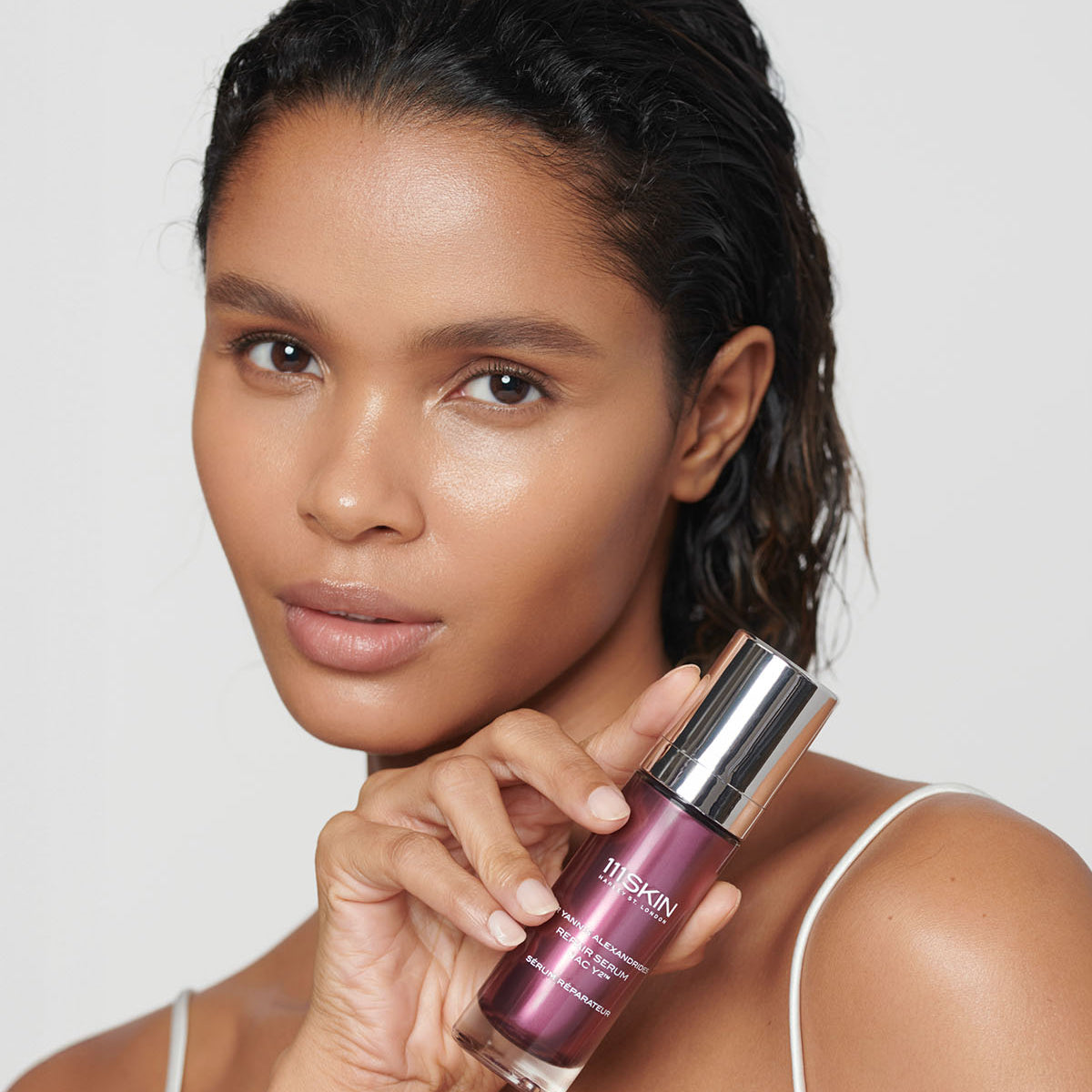
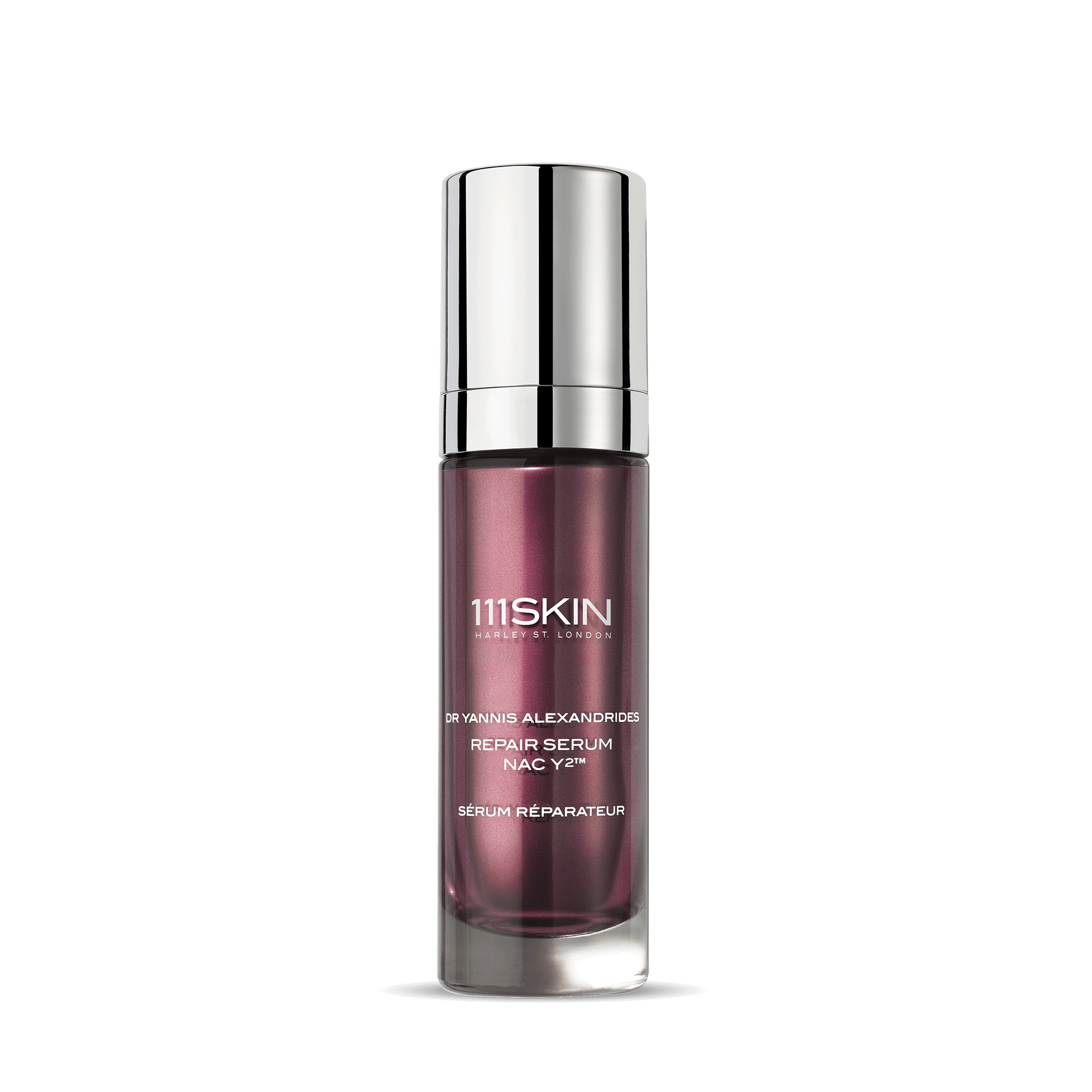
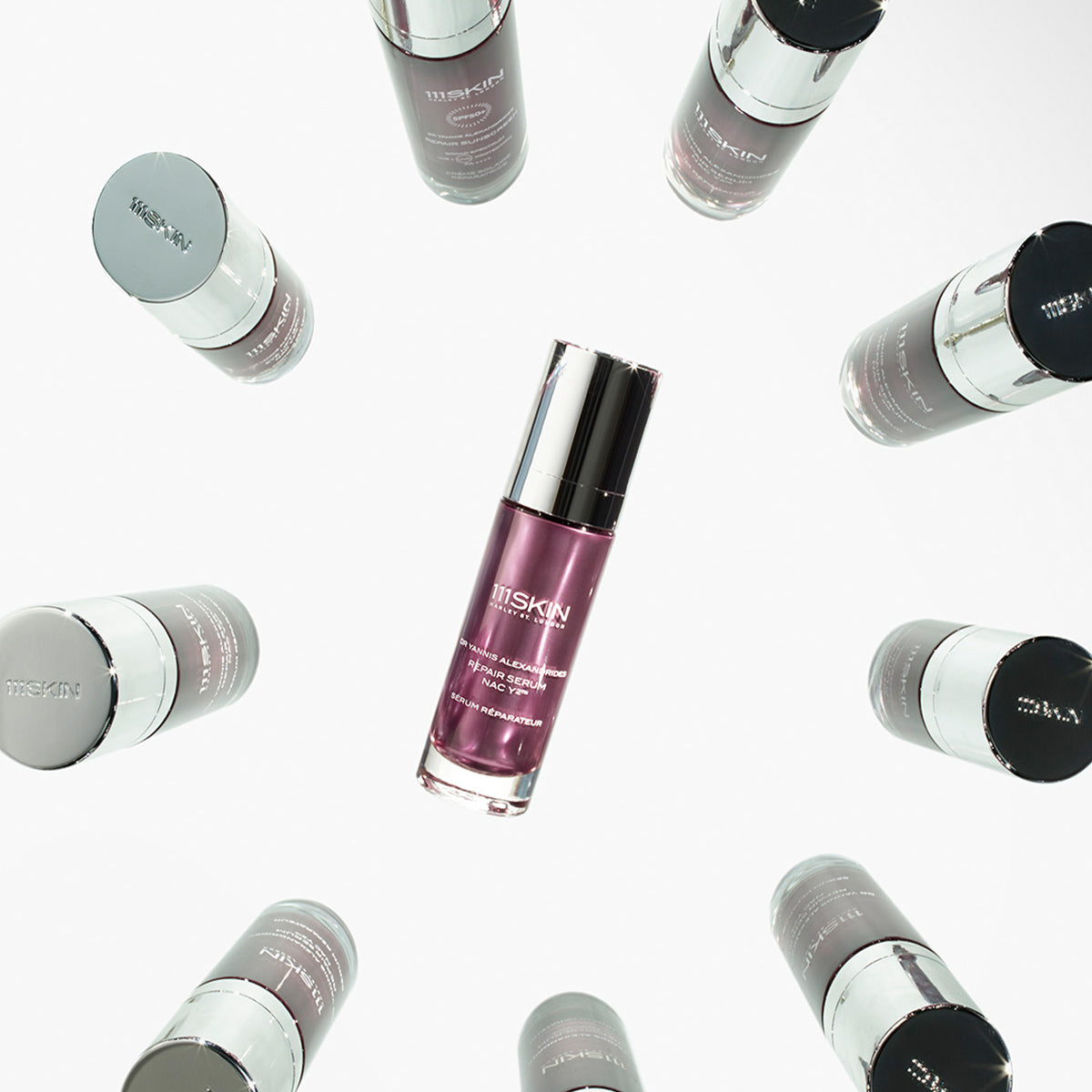
For dry-feeling skin and early signs of ageing, Repair Serum NAC Y²™ delivers hydration and smoother, plumper-looking skin in a cooling, velvety texture. It also addresses visible redness and received Tatler's Best Serum for Repair at the Beauty Awards 2025.
A compact daily routine keeps the essentials clear:
- Cleanse gently. Use a cleanser suited to your skin, rinse thoroughly and pat dry.
- Apply serum. Smooth 1 to 2 pumps of Repair Serum NAC Y²™ over the face and neck, morning or evening, before moisturiser.
- Moisturise. In the morning, apply a pea-sized amount of Repair Day Cream NAC Y²™ to the face, neck and décolletage after serum for nourishing hydration and skin-barrier support.
- Finish daytime skincare with sunscreen. Apply Repair Sunscreen SPF50+ generously and evenly after moisturiser, 15 to 20 minutes before sun exposure. Follow its exposure and reapplication instructions.
Where dark spots are the main concern, Dark Spot Correcting Serum provides a targeted serum choice. It contains 2% Tranexamic Acid, 5% seven Swiss Alpine plant extracts and 1% Gluconolactone. In 111SKIN's reported clinical trial of 32 participants, hyperpigmentation reduced by 36% after 56 days.
For that routine, use it as the serum step: apply 1 to 2 pumps evenly to the face and neck after cleansing, morning or evening, then follow with moisturising care and daytime SPF. Choose the serum that matches your priority; there is no need to turn a supplement decision into an elaborate topical routine.
Conclusion: choose a purpose, not a promise
There is no single best skin health supplement for everyone. Targeted supplementation has its clearest value when it addresses a nutritional shortfall or another professionally identified need. Collagen peptides are an elective option with mixed evidence, while high-dose beauty blends can add cost and risk without a clear benefit.
Start by reviewing your diet, identifying your actual skin concern and checking any proposed supplement against your medicines and existing products. Keep hydration, moisturisation and sun protection consistent, then use focused care for visible concerns such as uneven tone. This gives each part of your routine a clear job.
As with any skincare product, patch test before first use. If you are pregnant or breastfeeding, consult your doctor before using any skincare products.
FAQ
What is the best supplement for overall skin health?
The best choice is one that addresses an identified nutritional need. If your intake is already adequate, a skin-specific supplement may offer little additional benefit. A doctor or registered dietitian can help determine whether a targeted nutrient or broader dietary adjustment is appropriate.
Are collagen supplements worth taking for skin?
Some studies report improvements in hydration and elasticity, but the overall evidence is mixed and results are not guaranteed. Consider collagen an elective addition, with attention to its source, formulation, cost and suitability. It should not take priority over adequate nutrition and consistent sun protection.
Which supplements are best for glowing skin?
No supplement reliably creates a glow in everyone who is already well nourished. Correcting an inadequate nutrient intake may help related skin changes, while topical hydration and moisturisation directly improve how dry-feeling skin looks and feels. Persistent dullness alongside other unexplained symptoms warrants professional advice.
How long do skin supplements take to work?
There is no universal timeline: it depends on the nutrient, formulation, purpose and whether a deficiency is present. Collagen studies generally assess changes over weeks or months, but that is not a promised results schedule. For a prescribed or recommended supplement, follow your clinician's review plan rather than increasing the dose if changes are not visible.