


Table of Contents
- Introduction
- Understand the colour change before choosing a supplement
- What the main supplements can and cannot offer
- How to assess a supplement before buying it
- Support skin health without building a supplement stack
- Build a focused topical routine for dark spots
- Track progress without over-treating your skin
- Conclusion
- FAQ
Introduction
Supplements are not a reliable first-line solution for skin discolouration. Some oral antioxidants have been studied for dark spots and melasma, but the evidence is limited, and taking extra vitamins does not automatically produce a more even complexion. A supplement is most useful when it addresses an identified nutritional need or forms part of a clinician-led plan.
For most people concerned about dark patches, daily sun protection and targeted topical skincare are the more practical starting points. The important distinction is between supporting normal skin health and demonstrating that a capsule fades pigmentation. Understanding that difference helps you judge supplement claims, avoid unnecessary combinations and choose care that addresses the colour change you can actually see.
Understand the colour change before choosing a supplement
Dark spots are different from redness or pale patches
Skin discolouration describes several concerns, not one condition. Hyperpigmentation means an area looks darker than the surrounding skin because of increased pigment. It can follow a blemish or irritation, appear in areas repeatedly exposed to sunlight, or form broader patches associated with melasma.
Redness, purple marks and patches that have lost colour need a different assessment. A supplement marketed for dark spots is not a general treatment for all of these changes. Even within hyperpigmentation, a flat mark left after a blemish and a persistent facial patch may need different approaches.
Notice where the colour appears, when it began and whether it followed inflammation, a new product or increased sun exposure. These observations are useful when discussing uneven skin tone and texture with a skincare professional. They cannot establish a diagnosis, but they can prevent you from buying a product for the wrong concern.
Pigmentation does not automatically indicate a deficiency
Dark spots alone do not show that you are deficient in vitamin C, zinc or another nutrient. Nutritional deficiencies can affect the skin, but they cannot be identified reliably from an online photograph or the colour of a patch.
If your diet is restricted, you have difficulty absorbing nutrients or you have other symptoms, your doctor can decide whether investigation is appropriate. Correcting a confirmed deficiency supports health; taking more of a nutrient when your intake is already adequate is a different proposition.
Seek medical advice for unexplained, spreading or persistent colour changes. A spot that changes shape or colour, bleeds or behaves differently from your other marks should be assessed, not treated as routine pigmentation. Yellowing of the skin or whites of the eyes also needs prompt medical attention.
What the main supplements can and cannot offer
Glutathione: preliminary findings, not a dependable dark-spot remedy
Glutathione is an antioxidant naturally present in the body. Oral glutathione has attracted interest because small, short-term studies have reported changes in skin pigmentation. However, the evidence does not establish a dependable way to clear individual dark spots, and questions remain about the durability of results and long-term use for cosmetic lightening.
An overall change in a pigmentation measurement is also different from selectively fading the patch that concerns you. Products sold as liposomal, enhanced-absorption or premium formulations still need evidence for their particular formula. Those descriptions alone do not demonstrate a better cosmetic result.
Discuss oral glutathione with a qualified healthcare professional before considering it. Avoid intravenous glutathione for cosmetic skin lightening: an infusion is not simply a more effective version of a nutritional supplement, and it carries additional risks.
Polypodium leucotomos: a possible adjunct, not oral sunscreen
Polypodium leucotomos is a fern extract studied for effects related to the skin's response to ultraviolet exposure. It has also been investigated as an additional measure in some melasma routines. This makes it a reasonable subject for a dermatologist consultation, particularly when pigmentation remains difficult to manage.
It does not provide an SPF rating or permission to spend longer in the sun. Descriptions such as "internal sun protection" can obscure that important distinction. Sunscreen, shade and protective clothing remain necessary whether or not an oral antioxidant is used.
Extracts and finished supplements vary, so an ingredient name on the label does not establish that a product matches a studied preparation. A clinician can assess whether there is a useful role for one alongside your existing care, without turning it into the foundation of your pigmentation routine.
Vitamins C and E: nutritional support is not proof of spot correction
Vitamin C contributes to normal collagen formation and antioxidant protection, while vitamin E also has an antioxidant role. Getting adequate amounts matters for general health. It does not follow that high-dose capsules will fade established hyperpigmentation in someone who already has sufficient intake.
Be particularly careful with claims that borrow evidence from topical skincare. Swallowing vitamin C and applying a formulated vitamin C product are different routes of delivery, with different evidence. Benefits demonstrated for one cannot simply be assigned to the other.
There is no universal vitamin C and vitamin E supplement combination that everyone with dark spots needs. A varied diet is a sensible nutritional starting point, and supplementation should reflect an actual requirement rather than the promise of a brighter complexion.
Niacinamide and zinc: separate familiar ingredients from oral claims
Niacinamide, a form of vitamin B3, is familiar in topical skincare. That familiarity can make oral niacinamide sound like a straightforward extension of a serum, but topical pigmentation benefits do not establish that a high-dose capsule will produce the same result.
Zinc supports normal biological functions, including skin health and wound healing. It is not a proven universal correction for age spots, blemish marks or melasma. Dark patches are not a reason to begin a prolonged high-dose zinc course.
Excess zinc can interfere with copper balance, and higher-dose vitamin preparations can have adverse effects or interact with medicines. Ask a pharmacist or doctor to assess the purpose and total intake before adding either ingredient specifically for discolouration.
Botanical extracts, collagen and biotin: look for the right endpoint
Grape seed, liquorice, green tea and other botanical extracts often appear in pigmentation supplements. Antioxidant activity or an effect seen in laboratory research can provide a reason for further study, but it does not establish that an oral blend visibly fades dark spots in everyday use.
"Natural" also does not mean free from interactions. Liquorice preparations, for example, can affect blood pressure and potassium depending on their composition and use. A blend containing several plant extracts deserves the same careful review as a single-ingredient supplement.
Collagen and biotin are commonly marketed for beauty concerns, but neither is an established targeted solution for hyperpigmentation. A study about hydration, elasticity, hair or nails does not answer the question of whether a supplement corrects uneven pigment.
Judge a pigmentation supplement by evidence of visible pigmentation improvement with that oral formula, not by how many familiar skincare ingredients appear on its label.
How to assess a supplement before buying it
Look beyond the front-of-pack promise
A useful label tells you what you would actually be taking. Broad claims such as "radiance from within" or "melanin balance" leave important questions unanswered, including the amount of each ingredient and whether the finished formula has been studied.
Before purchasing, check:
- The intended outcome: does the research concern dark spots or melasma, or a different endpoint such as hydration?
- The route of use: was the ingredient swallowed, applied to skin or tested only in a laboratory?
- The formula and amounts: are the individual ingredients disclosed clearly, and does the product resemble the preparation discussed in its research?
- The quality information: is there credible information about manufacturing and independent testing for identity, purity or contaminants?
- The safety advice: are cautions, interactions and recommended use clearly explained?
Quality testing is valuable, but it does not prove that a supplement fades pigmentation. Similarly, a long ingredient list does not demonstrate that the combination works better than a simpler preparation. Buying several overlapping formulas can increase intake without increasing the likelihood of a useful result.
Review your existing intake and medicines
Count everything you already take, including multivitamins, hair and nail products, sports preparations and fortified powders. The same nutrient can appear in several places. Adding a "skin brightening" capsule may duplicate ingredients you did not intend to increase.
Bring the full labels to a pharmacist or doctor, particularly if you take prescription medicines, have a long-term condition, are pregnant or are breastfeeding. They can assess interactions and whether a proposed supplement has a clear purpose for you.
Do not use a supplement to postpone assessment of a new colour change. If you do start one under professional guidance, agree what you are trying to achieve and when to review it. There is no evidence-based universal supplement course that guarantees clearer pigmentation after a fixed number of weeks.
Keep prescription tablets separate from supplements
Oral tranexamic acid is sometimes used by dermatologists for selected people with melasma. It is a prescription medicine, not a nutritional supplement, and requires an assessment of medical history and risks, including clotting risk.
Topical tranexamic acid is a different application. Its presence in a cosmetic serum does not make that serum equivalent to a prescription tablet, nor does it justify self-medicating with oral treatment.
For targeted cosmetic care, Dark Spot Correcting Serum contains 2% Tranexamic Acid, alongside 5% seven Swiss Alpine plant extracts and 1% Gluconolactone. It addresses visible dark spots and uneven tone through a topical routine, with a clear application method discussed below.
Support skin health without building a supplement stack
Use food to meet nutritional needs
A balanced diet provides nutrients needed for normal skin function without turning every meal into a pigmentation treatment. Include varied fruit and vegetables, adequate protein, sources of healthy fats and foods that supply essential minerals.
Vitamin C-rich foods include peppers, citrus fruit and broccoli. Protein and zinc can come from different combinations of pulses, nuts, seeds, dairy, eggs, seafood or meat, according to your dietary preferences. The aim is nutritional adequacy, not finding one food that will erase a patch.
Restrictive diets and repeated "cleanses" can make that aim harder. There is no need to detoxify your skin or liver to fade ordinary dark spots. If meeting your needs through food is difficult, a registered dietitian or doctor can help identify specific gaps.
Distinguish a dull surface from excess pigment
Dry-feeling skin can look less luminous, and dehydration can make fine surface lines more noticeable. Improving hydration creates a smoother, plumper-looking finish, but this is different from reducing pigment within a dark spot.
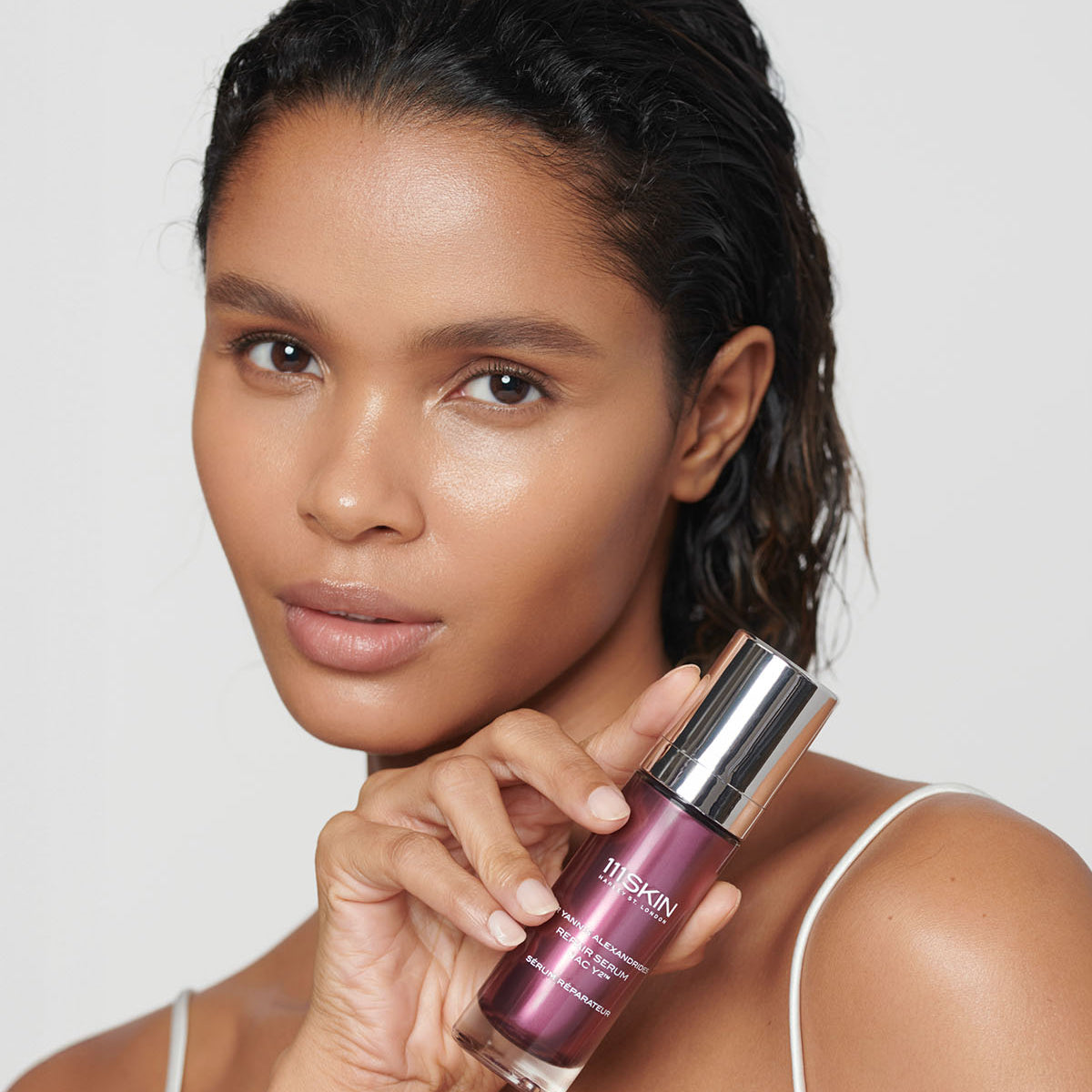
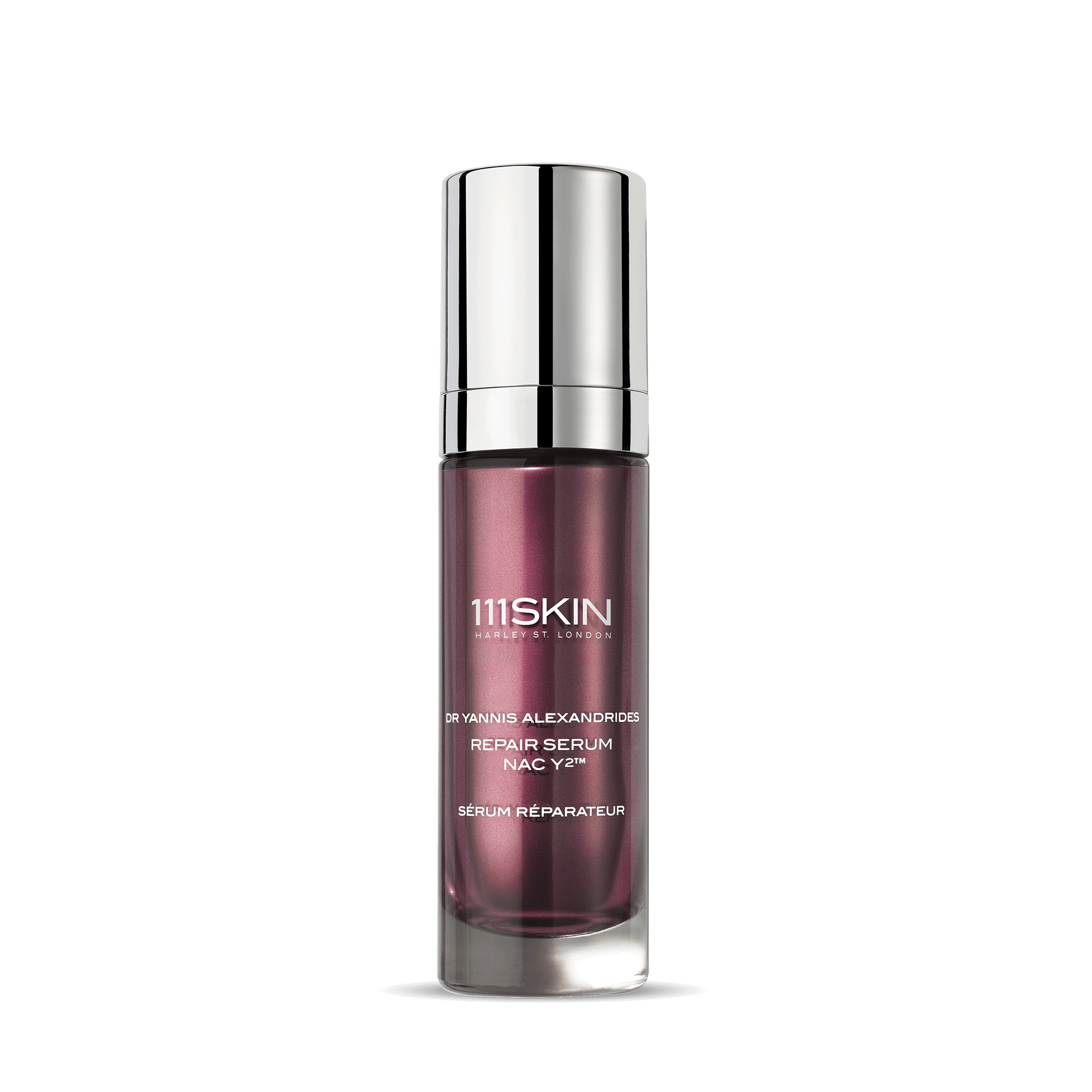
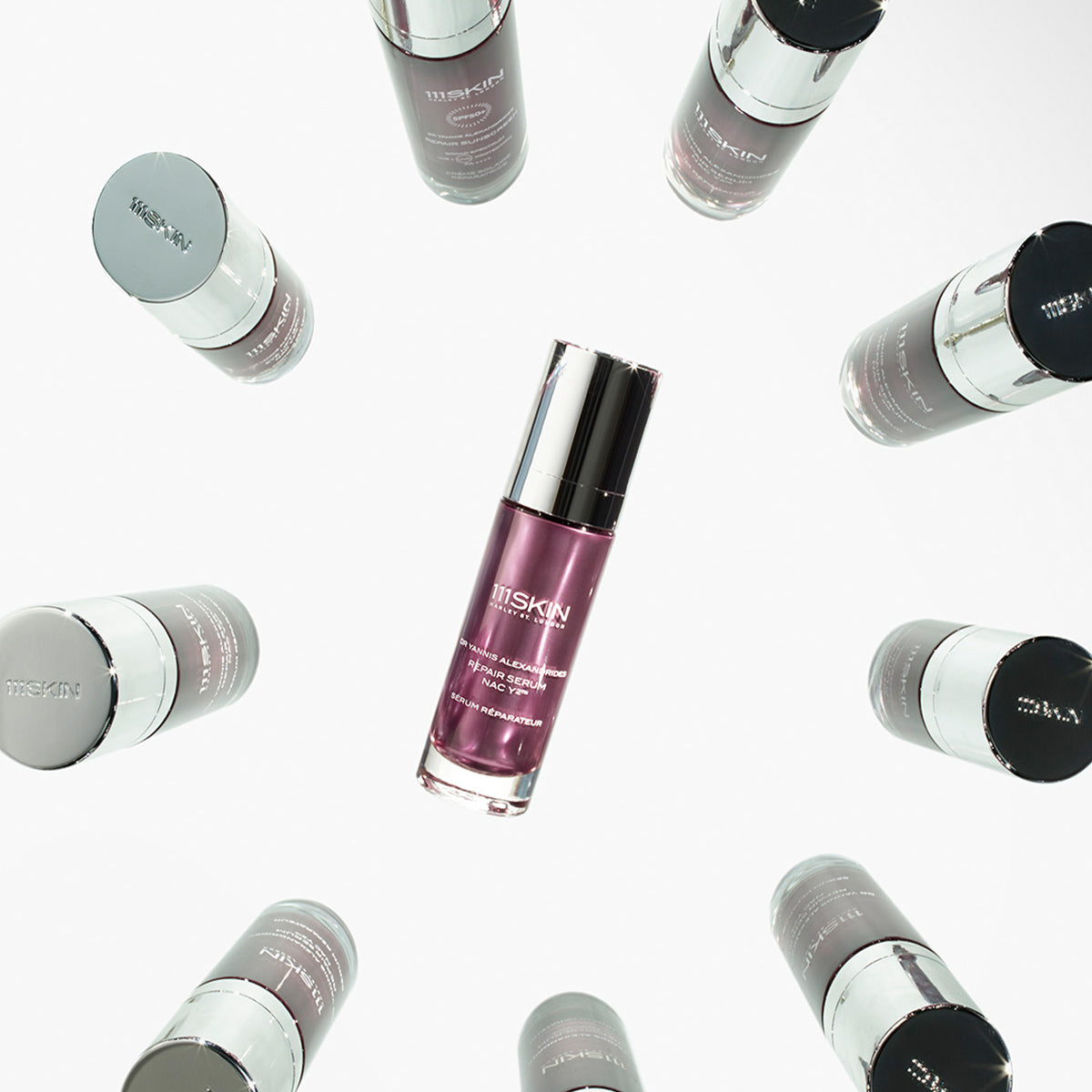
Repair Serum NAC Y²™ is useful when uneven tone is accompanied by dehydration, visible redness or early signs of ageing. Its cooling, velvety texture delivers hydration and smoother, plumper-looking skin. It answers those concerns directly; it should not be mistaken for a nutritional supplement or a dedicated dark-spot treatment.
This distinction helps you choose care accurately. If the main issue is a persistent brown mark, prioritise targeted tone care and sun protection. If your complexion also feels tight or looks rough, include moisturising support instead of escalating supplement doses in search of radiance.
Build a focused topical routine for dark spots
111SKIN was founded by plastic and reconstructive surgeon Dr Yannis Alexandrides and Eva Alexandridis, drawing on Dr Yannis' practice at 111 Harley St. in London. That clinical inspiration translates into a useful principle here: identify the visible concern, then give each product a clear role.
Make targeted tone care the treatment step
Dark Spot Correcting Serum targets visible dark spots and uneven skin tone. It is a focused choice when pigment, rather than dehydration alone, is the concern. In 111SKIN's reported clinical trial of 32 participants, hyperpigmentation was reduced by 36% after 56 days.
That result provides a product-specific reference point, not a deadline for every complexion. Pigmentation varies with its cause, persistence and ongoing triggers. Consistent application matters, as does limiting further sun exposure.
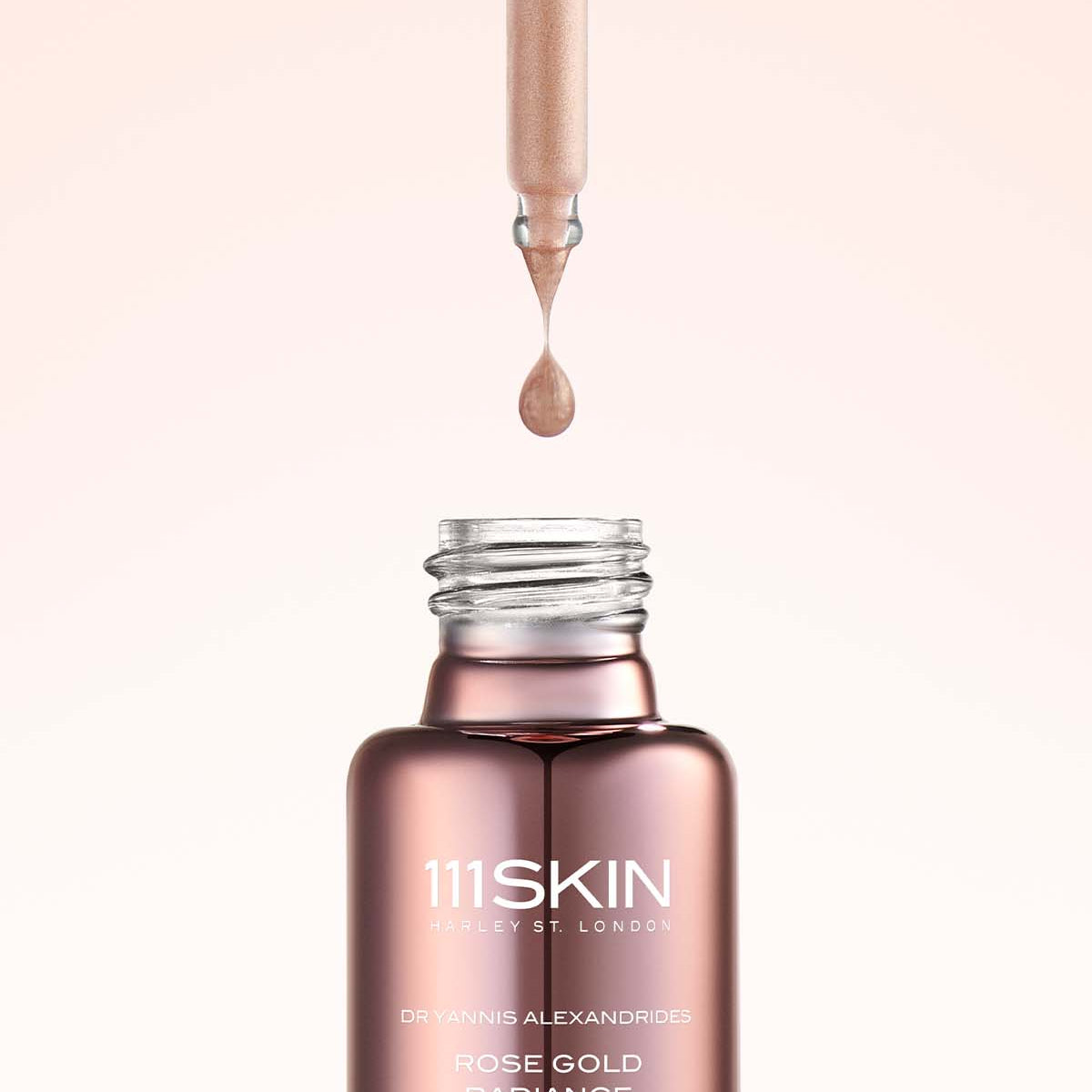
For immediate luminosity, Rose Gold Radiance Booster has a different role: it adds hydration and a subtle shimmer. In the morning, shake and mix 1 to 2 drops with moisturiser for all-over radiance. This can complement a routine concerned with uneven tone, while Dark Spot Correcting Serum remains the targeted choice for visible pigment.
Keep the daily routine manageable
A concise morning routine makes the essential steps easier to repeat:
- Cleanse. With Cleansing Oil, apply 2 to 3 pumps using dry hands on dry skin. Massage for 30 seconds, rinse with warm water and pat dry.
- Apply targeted care. Smooth 1 to 2 pumps of Dark Spot Correcting Serum evenly over the face and neck after cleansing.
- Moisturise. Apply a pea-sized amount of Repair Day Cream NAC Y²™ to the face, neck and décolletage after serum for nourishing hydration and skin-barrier support.
- Protect. Apply Repair Sunscreen SPF50+ generously and evenly after moisturiser, 15 to 20 minutes before sun exposure. Follow its exposure and reapplication instructions.
Dark Spot Correcting Serum can also be used in the evening after cleansing, followed by moisturising care. Repair Night Cream NAC Y²™ is the replenishing evening option; apply a pea-sized amount to the face, neck and décolletage after serum.
Sun protection deserves particular attention because ultraviolet exposure can deepen pigmentation and encourage new marks. Add shade and a hat when outdoors. For melasma, ask a dermatologist whether a tinted sunscreen containing iron oxides would be useful for additional visible-light protection; do not assume every sunscreen provides that benefit.
A practical starting point is one targeted serum, adequate moisturising care and consistent sun protection. Add an oral product only when it has a defined purpose in your personal plan.
Track progress without over-treating your skin
Pigmentation often changes gradually. Take occasional photographs in the same natural light, without make-up, and compare the same areas. Different lighting, camera exposure and a temporary surface glow can make it difficult to judge whether a mark has actually faded.
Keep a brief record of the products you use and any irritation. Introducing several supplements and skincare treatments together makes it harder to identify what is helping or causing a reaction. A more complicated routine is not necessarily a more effective one.
Picking blemishes, vigorous scrubbing and repeatedly applying products that sting can create further inflammation and leave additional marks. Stop a product if irritation occurs, and seek professional advice if irritation persists. Persistent or recurrent pigmentation also warrants an assessment, especially if you are unsure what caused it.
When reviewing a supplement, ask whether there has been a meaningful change in the concern you originally wanted to address. Do not keep increasing the dose or adding bottles because progress is unclear. Reassessment is more useful than an open-ended commitment to an unproven combination.
Conclusion
The best answer to "which supplements help skin discolouration?" is not a universal shopping list. Correct an identified nutritional gap when necessary, and discuss oral antioxidants with a clinician if there is a specific reason to consider them. No capsule reliably replaces targeted skincare, sun protection or an accurate assessment of a changing patch.
For visible dark spots, start by establishing consistent SPF use and a focused treatment such as Dark Spot Correcting Serum, supported by moisturising care. If you need help distinguishing pigmentation from dryness, redness or texture concerns, the 111SKIN skincare quiz can help organise your cosmetic priorities; unexplained colour changes belong with a healthcare professional.
As with any skincare product, patch test before first use. If you are pregnant or breastfeeding, consult your doctor before using any skincare products.
FAQ
What is the best supplement for skin discolouration?
There is no single supplement reliably proven to clear all forms of skin discolouration. The right approach depends on whether you have dark spots, redness, pale patches or another change, and whether a nutritional deficiency is present. For dark spots, daily sun protection and targeted topical care are usually the more useful starting points.
Can vitamin C tablets fade dark spots?
Vitamin C supports normal skin function, but taking extra vitamin C has not been established as a dependable way to fade dark spots when your nutritional intake is adequate. Evidence for topical vitamin C cannot automatically be applied to tablets. Discuss supplementation if you have a suspected deficiency or difficulty meeting your nutritional needs.
Is glutathione safe to take for pigmentation?
Small, short-term studies have explored oral glutathione for pigmentation, but long-term safety and the durability of cosmetic results remain uncertain. Speak to a qualified healthcare professional before taking it for skin lightening. Avoid intravenous glutathione for this cosmetic purpose.
How long do supplements take to improve hyperpigmentation?
There is no reliable universal timeframe because supplement evidence, formulas and causes of pigmentation vary. Promises of guaranteed improvement within a fixed course should be treated cautiously. Agree a review point with your clinician, and continue sun protection rather than waiting for a capsule to do the work.