


Table of Contents
- Introduction
- What does a puffy face actually mean?
- Why the face can look puffy after plastic surgery
- When swelling needs prompt medical attention
- Is filler-related "pillow face" the same as surgical swelling?
- Can plastic surgery treat a persistently puffy face?
- Where skincare helps with everyday visible puffiness
- A compact routine once normal skincare can resume
- Choose the next step by the cause
- FAQ
Introduction
A puffy face after plastic surgery can reflect temporary healing-related swelling, but new, worsening or persistent swelling needs assessment by your surgical team. Fullness after dermal filler is a different concern, and neither should automatically be treated as everyday cosmetic puffiness.
If you are considering surgery for a puffy face, the first step is to establish whether you are noticing fluid-related swelling, under-eye bags or your natural facial structure. Each calls for a different approach.
Skincare has a useful role in hydration, comfort and reducing the appearance of everyday puffiness on healthy, intact skin. Knowing when that role begins, and when medical aftercare takes priority, helps you care for your face appropriately.
What does a puffy face actually mean?
Swelling, facial fullness and under-eye bags are different
"Puffy" describes an appearance, not a diagnosis. It can mean a temporary swollen look across the face, a persistent rounded contour, or a localised pouch beneath the eyes. These can look similar in a photograph while having very different causes.
Swelling involves fluid accumulating in tissues. After surgery, tissue manipulation and the body's healing response can contribute to this accumulation. Natural facial fullness, by contrast, reflects features such as fat distribution and underlying structure; it is not necessarily swelling or something that needs correcting.
Under-eye bags can involve changes in the skin and the fat around the lower eyelids. A product that hydrates fine lines or improves visible puffiness cannot remove or reposition that fat. Equally, an operation designed to address excess eyelid skin is not a general treatment for a swollen face.
The useful distinction is between a changing appearance and a persistent structural feature. A clinician can examine the area and establish which factors are involved, particularly when several overlap.
Timing gives your clinician important information
When puffiness began matters as much as where it appears. A face that became swollen after an operation needs a recovery assessment, while new swelling without an obvious explanation may need a GP assessment. Fullness developing after several filler appointments calls for a review of the treatment history.
Before an appointment, note:
- The starting point: whether the change followed surgery, injections, a new medicine or a new skincare product.
- The location: the whole face, one cheek, the lower eyelids or a specific treated area.
- The pattern: whether it is improving, worsening, fluctuating or remaining unchanged.
- Other symptoms: pain, redness, heat, fever, itching, skin colour changes or visual disturbance.
These observations help a professional assess you; they do not establish the cause on their own. Photographs taken in similar lighting can also make changes easier to describe, provided taking them does not delay seeking care.
Start with the timeline and the symptoms, not the product. After a procedure, those details are more useful than deciding whether your face looks "too puffy".
Why the face can look puffy after plastic surgery
Healing can temporarily obscure the result
Facial surgery affects tissues beneath the surface as well as the skin. The healing response and temporary changes in fluid drainage can produce swelling, while bruising, tightness and altered sensation may change how the face looks and feels.
This means the early appearance is not a reliable preview of the final result. A cheek may look fuller, the eyelids may appear puffy, and familiar contours may be less defined. Some unevenness can occur during recovery, but a new or marked difference between the two sides should be discussed with your surgeon.
Recovery also depends on what was done. Eyelid surgery, a facelift and fat grafting involve different areas and techniques, so advice for one cannot simply be applied to another. Combined procedures can make the recovery picture more complex.
111SKIN was founded by plastic and reconstructive surgeon Dr Yannis Alexandrides and Eva Alexandridis, drawing on his practice at 111 Harley St. in London. That clinical inspiration informs a considered approach to skincare, while surgical recovery remains the responsibility of your treating team.
How long does post-operative puffiness last?
There is no single deadline for facial swelling to disappear. The procedure, extent of treatment, individual healing and any complications all influence the course. Visible improvement and complete settling are also different milestones.
For blepharoplasty, Mayo Clinic describes bruising and swelling as generally lessening over about 10 to 14 days. That does not mean every eyelid is fully settled at two weeks, or that the same timetable applies to facelift surgery.
After a facelift, swelling can improve over weeks while subtler changes continue for months. Your surgeon should explain the expected pattern for your operation and when they can meaningfully assess the result. A recovery photograph from someone else cannot establish whether your own progress is on track.
Ask for specific milestones: what should be improving by the next review, which symptoms should prompt a call, and when persistent puffiness would warrant examination. This provides a more useful framework than a promise that all swelling will disappear by a particular date.
Follow the aftercare for your operation
Post-operative care is part of the procedure, not an interchangeable set of beauty tips. Depending on your operation, your surgeon may advise changes to sleeping position, activity, wound care or the use of compresses. Follow their instructions on the method and timing.
Compression is a good example of why individual advice matters. Some surgical protocols use it and others do not. Do not buy a facial compression garment or tighten an existing one simply because another patient's recovery guide recommends it.
The same principle applies to massage, facial rollers, gua sha and device treatments. Pressure on healing tissues is different from applying skincare to an unoperated face. Ask your surgeon before introducing these techniques, including treatments advertised as lymphatic drainage.
For a practical recovery plan:
- Keep your written instructions accessible. Include the team's daytime and out-of-hours contact details.
- Use medicines and wound-care products as directed. Ask before adding supplements or changing prescribed treatment.
- Attend scheduled reviews. Report changes between appointments when advised, rather than saving every concern for the next visit.
- Confirm when skincare can resume. Ask separately about cleansing, eye products, masks, sunscreen and make-up if the treated area is involved.
A product described as hydrating or soothing is not automatically suitable for an incision or recently treated skin. Permission to resume a cleanser also does not necessarily mean every active treatment can restart at the same time.
When swelling needs prompt medical attention
Some swelling is expected after facial surgery, but that should never become a reason to dismiss concerning changes. Your team would rather assess an unexpected symptom than have you attempt to manage a complication with skincare.
Seek emergency help for difficulty breathing or swelling of the tongue or throat. Sudden swelling involving the lips can also be part of a serious allergic reaction, particularly when it occurs with breathing difficulty or feeling faint.
After facial surgery, seek urgent medical assessment for new visual disturbance, severe new eye pain, chest pain or shortness of breath. Contact your surgical team promptly for rapidly increasing swelling, especially on one side, worsening pain or pressure, bleeding, fever, spreading redness, unusual wound drainage or concerning skin colour changes.
These signs do not all have the same cause, and you do not need to identify the cause before asking for help. If the surgical team is unavailable and symptoms are urgent, use urgent or emergency medical services.
New or persistent facial swelling without a recent procedure also deserves medical attention. Allergies, infection and medication reactions are among the possible explanations. Do not stop a prescribed medicine on your own; ask a healthcare professional how to proceed.
Is filler-related "pillow face" the same as surgical swelling?
Filler adds volume; surgery has a different recovery process
"Pillow face" is an informal term commonly used for an overly full appearance associated with dermal filler. It is not a precise diagnosis and should not be used to label every rounded or swollen face.
Dermal fillers are injectable treatments, not plastic surgery. Their intended role includes adding or restoring volume. An unwanted full appearance can relate to the amount or placement of filler, while swelling can also contribute after treatment.
Many fillers contain hyaluronic acid, which binds water. This does not mean every hyaluronic acid filler produces persistent puffiness, or that a photograph can show whether someone has been overfilled. A clinician needs the product details, treatment history and an examination.
Topical Hyaluronic Acid in skincare has a different role: it is a humectant used to support skin hydration. Applying a hydrating serum is not equivalent to injecting a volumising filler, and choosing skincare should not be based on treating these as interchangeable.
Persistent fullness needs assessment before correction
If your face remains fuller than expected after filler, arrange a review with the treating clinician or another appropriately qualified medical practitioner experienced in injectable complications. Bring the treatment dates and names of the injected products if available.
Hyaluronic acid filler can sometimes be dissolved using hyaluronidase, an injectable enzyme. This is a medical treatment with its own risks and suitability considerations, not a guaranteed reset. It does not dissolve every type of filler.
Avoid booking additional filler simply to balance an area that has not yet been assessed. Similarly, a de-puffing mask cannot dissolve filler, correct its placement or treat a complication.
Sudden pain, skin colour changes or visual symptoms after filler require urgent medical assessment. They should not be treated as an ordinary cosmetic concern or left until a routine follow-up.
Can plastic surgery treat a persistently puffy face?
Surgery can address selected structural concerns, but there is no universal operation for "puffiness". The relevant question is what is creating the appearance and whether a procedure can safely change it.
Lower-eyelid blepharoplasty may be considered for certain under-eye bags involving excess or displaced fat and skin. The surgeon may remove or redistribute tissue, depending on the anatomy and treatment plan. This is different from treating temporary fluid-related swelling.
Fullness lower down, where the eyelid meets the upper cheek, can involve other concerns, sometimes described as malar mounds or festoons. These should not automatically be assumed to be ordinary lower-eyelid bags. A specialist assessment matters because the position and nature of the concern affect treatment choices.
Eyelid surgery carries risks, including bleeding, infection, dry or irritated eyes, problems closing the eyes, scarring and, rarely, visual complications. A consultation should address eye health and medical history as well as the desired cosmetic result.
Useful questions include:
- What is contributing to the fullness: skin, fat, fluid or a combination?
- Which part of the appearance would the proposed procedure change?
- What would it leave unchanged?
- What are the risks, recovery requirements and alternatives in my case?
A naturally full face does not need surgery simply because it differs from a particular aesthetic trend. If swelling is unexplained, fluctuating or new, establish its cause before considering a contour-changing procedure.
Where skincare helps with everyday visible puffiness
Once medical concerns have been addressed, and any treating clinician has cleared a return to skincare, cosmetic products can improve hydration, visible puffiness and the appearance of tired skin. The recommendations below are for healthy, intact skin, not a post-operative swelling protocol.
Choose daily eye care for the concerns that overlap
Eye Lift Gel NAC Y²™ is a lightweight hydrating eye gel that addresses visible puffiness, dark circles and wrinkles, with a lifted-looking finish. It contains NAC Y²™, Argireline and Caffeine. It is a relevant choice when puffy-looking eyes occur alongside dehydration lines or a tired appearance.
Its wrinkle benefits are part of that choice, not separate from it. In 111SKIN's reported clinical trial of 30 participants using Primos CR, Eye Lift Gel NAC Y²™ produced a 35% wrinkle reduction after two weeks.
Dark circles, lines and puffiness can coexist, but they are not the same feature. Hydration helps skin look smoother; a de-puffing benefit addresses visible swelling-like fullness; dark-circle care addresses the shadowed appearance. None of these cosmetic outcomes removes a structural under-eye bag.
Use a targeted mask for a refreshed appearance
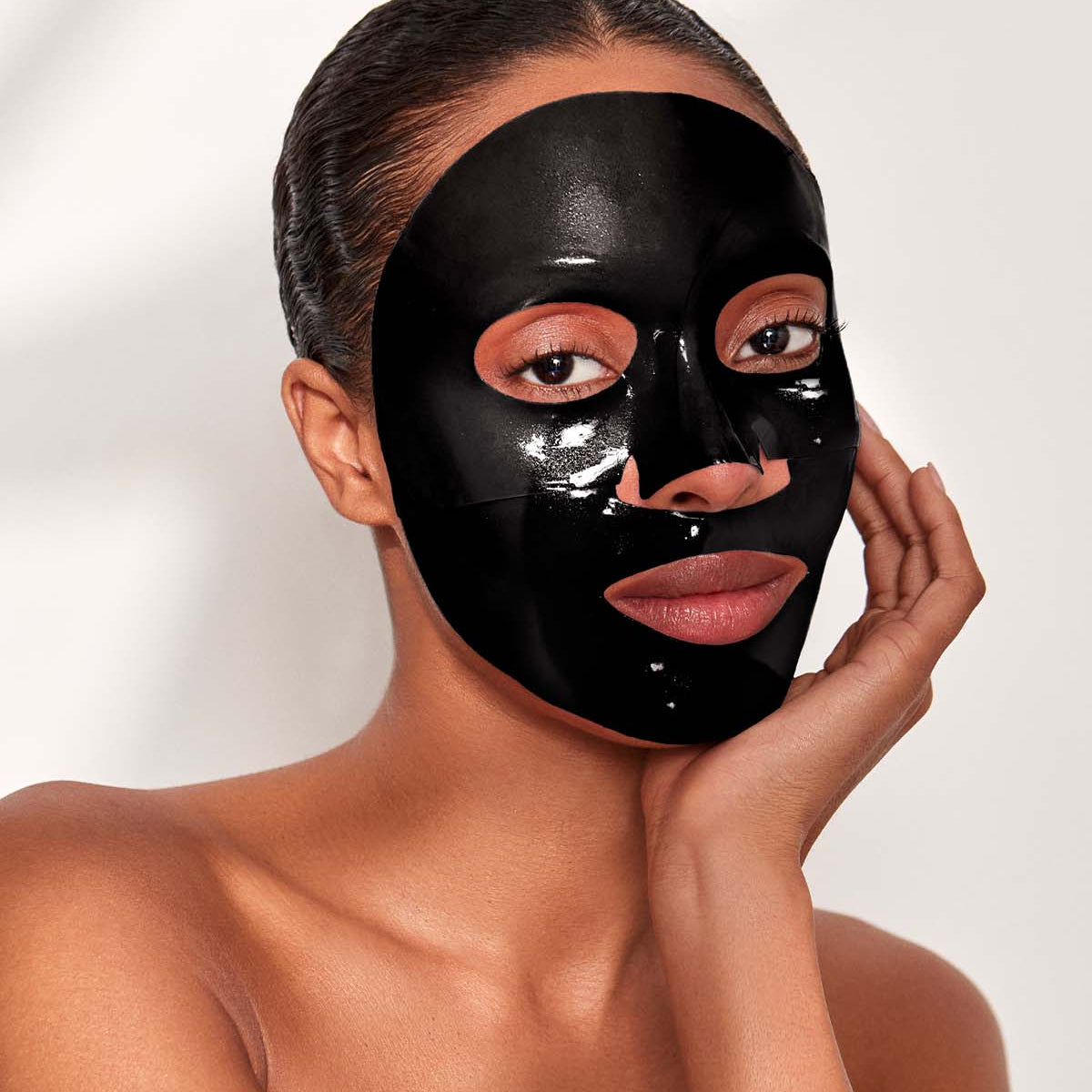
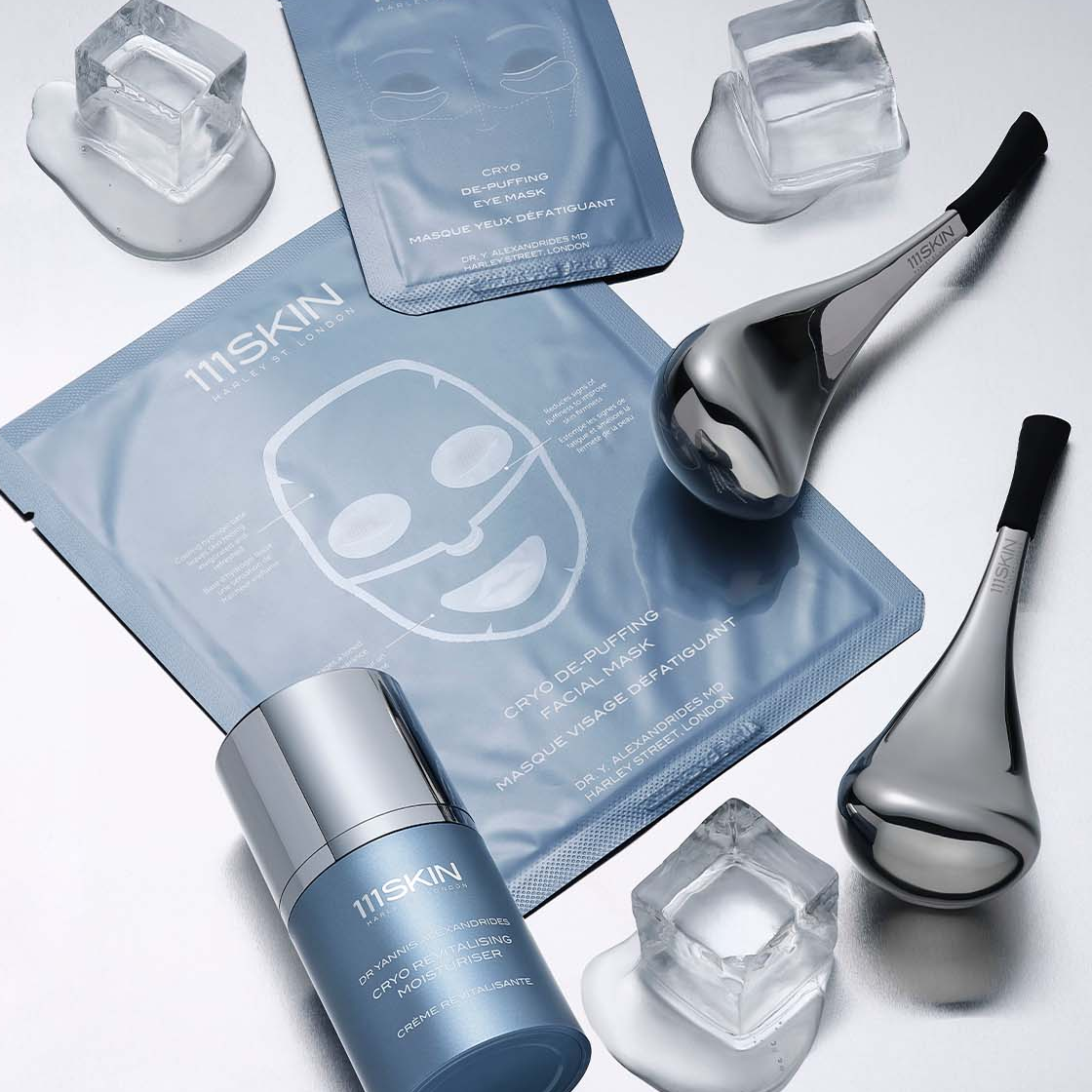
Cryo De-Puffing Facial Mask is a two-piece hydrogel mask for visibly puffy, tired-looking skin, featuring Caffeine and peptides. On clean, dry skin after cleansing, apply it in the morning or evening, wear for 20 minutes and remove before subsequent leave-on skincare. It may be refrigerated before use.
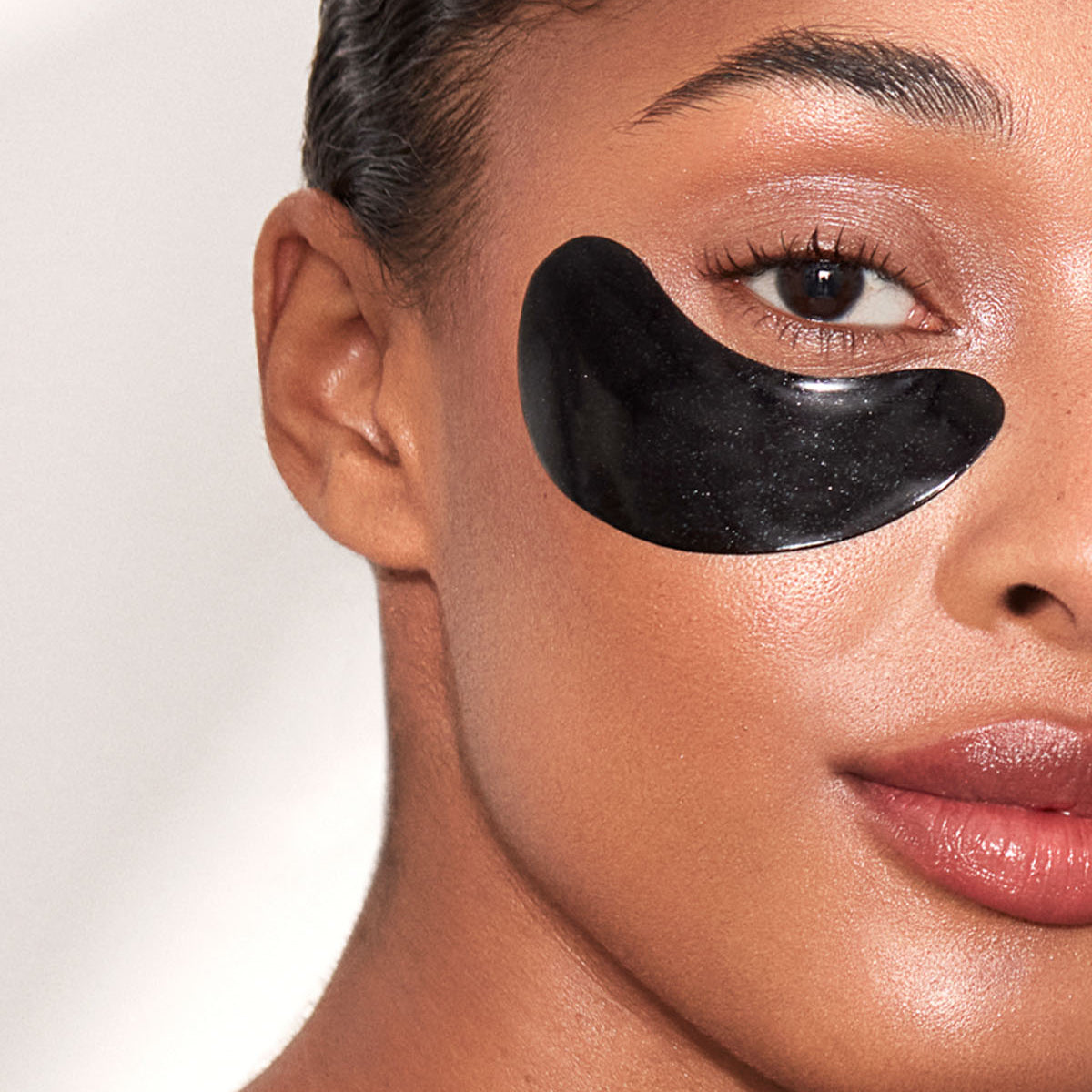
For a concern limited to beneath the eyes, Cryo De-Puffing Eye Mask offers a targeted hydrogel format featuring Seaweed Extract, Vitamin E and Peptide Complex. After cleansing, remove the protective films from both sides, place one mask beneath each eye and leave for 20 minutes. Remove and gently pat in the remaining product; use morning or evening, and refrigerate before use if desired.
Cryo De-Puffing Eye Mask received InStyle Best Eye Mask in the Best Beauty Buys Awards 2022. Its targeted shape makes it a practical choice when the under-eye area, rather than the whole face, needs a refreshed look.
The refrigeration option belongs to these masks. It is not an instruction to refrigerate eye gels or to use a chilled cosmetic mask as a surgical cold compress.
Match the care to the concern: a facial mask for a broadly puffy, tired-looking complexion, an eye mask for beneath the eyes, and daily eye care for ongoing hydration and visible lines.
A compact routine once normal skincare can resume
Keep the daily routine focused on comfortable cleansing, targeted eye care, hydration and daytime protection. If you are recovering from a procedure, your clinician's instructions determine when each step can return. On unoperated, healthy skin, this is a straightforward routine for everyday care.
- Cleanse with Cleansing Oil. With dry hands, apply 2 to 3 pumps to dry skin and massage for 30 seconds. Rinse with warm water and pat dry; it removes make-up and impurities while leaving skin softer.
- Apply Eye Lift Gel NAC Y²™. Share half a pump between your ring fingers. Pat from the outer corner inwards, then move upwards and sweep over the brow bone back to the outer corner until absorbed, avoiding rubbing beneath the eyes.
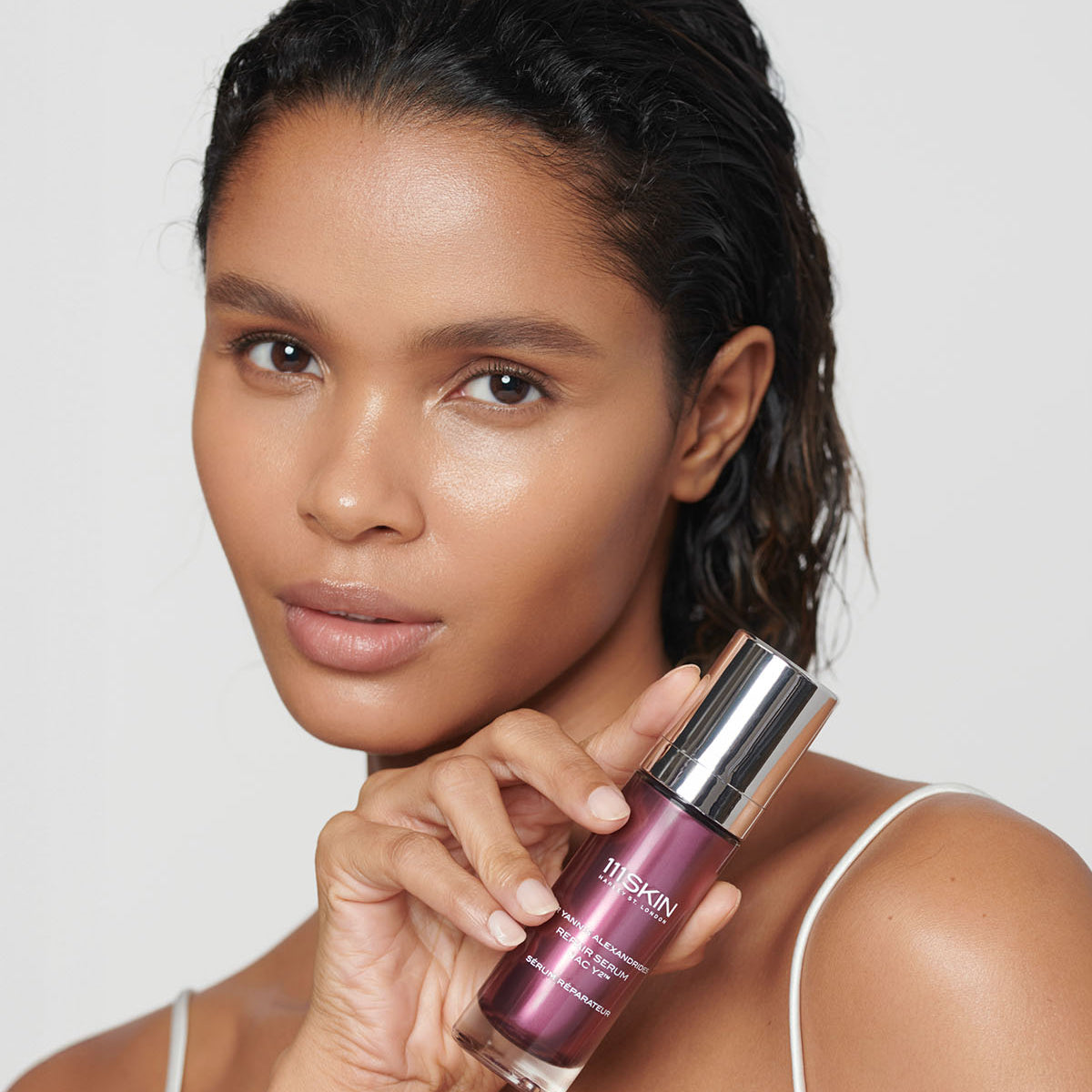
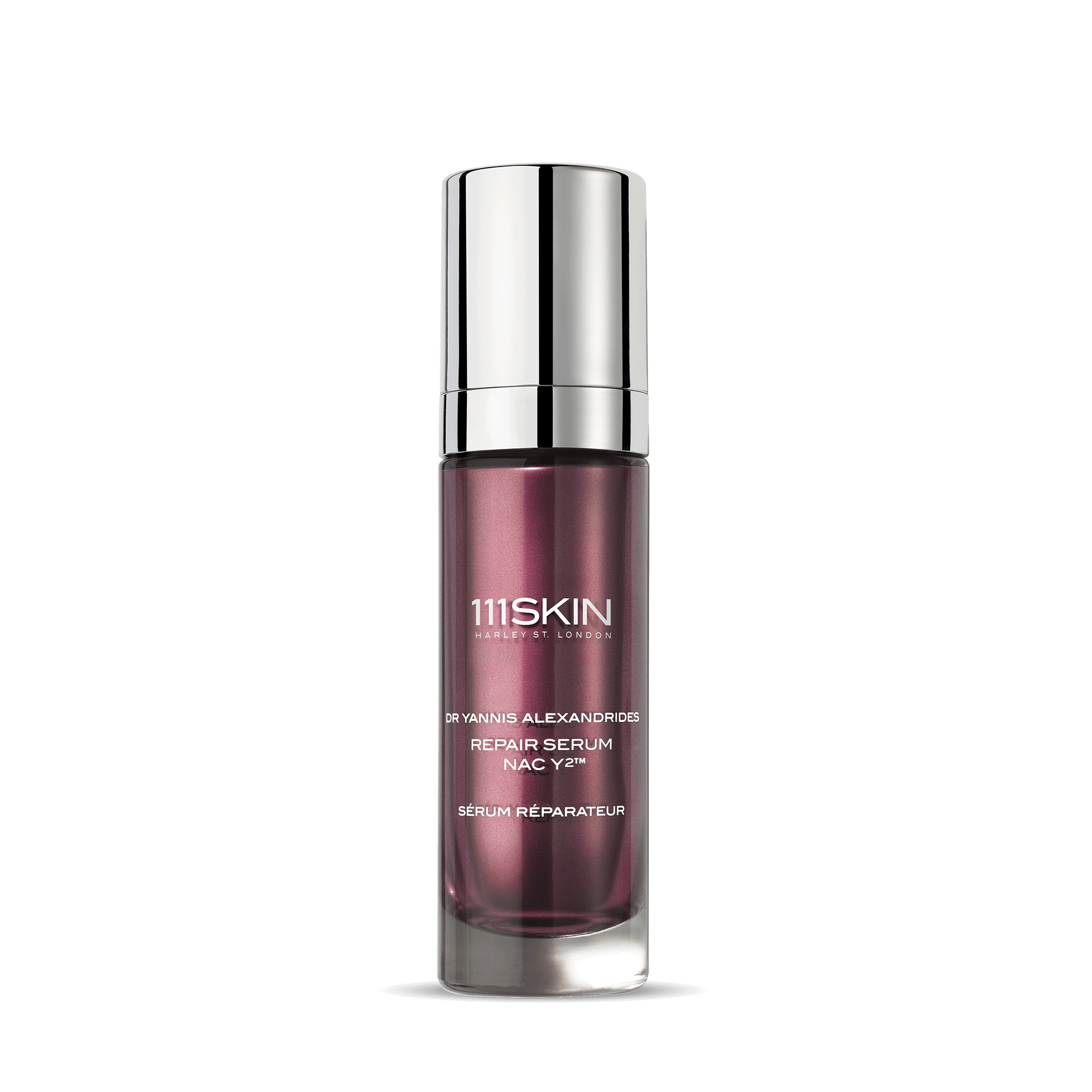
- Follow with Repair Serum NAC Y²™. Apply 1 to 2 pumps to the face and neck. Its cooling, velvety texture delivers hydration and supports smoother, plumper-looking skin while addressing visible redness and early signs of ageing.
- Moisturise. In the morning, apply a pea-sized amount of Repair Day Cream NAC Y²™ to the face, neck and décolletage after serum for nourishing hydration and skin-barrier support. In the evening, use a pea-sized amount of Repair Night Cream NAC Y²™ over those areas after serum.
- Complete morning care with Repair Sunscreen SPF50+. Apply generously and evenly after moisturiser, 15 to 20 minutes before sun exposure, and follow its exposure and reapplication instructions.
The cleansing, eye-care and serum steps can be used morning and evening. The eye gel goes before serum in this routine, following its specific directions.
Hydrated, plumper-looking skin is not the same as a swollen face. Humectants attract water within the skin's surface layers, while moisturising care helps soften skin and limit moisture loss. These benefits improve skin quality without claiming to treat fluid accumulation deeper in the tissues.
If a newly introduced product causes irritation, stop using it. Persistent irritation or swelling needs professional advice, especially around the eyes or following a procedure.
Choose the next step by the cause
For puffiness after plastic surgery, the most useful next step is a conversation with your surgical team about the pattern of swelling and your recovery milestones. For persistent fullness after filler or longstanding under-eye bags, seek an assessment before choosing another procedure.
For everyday cosmetic puffiness on healthy skin, focus your selection on the area affected. Eye Lift Gel NAC Y²™ provides daily care for puffiness, dark circles and visible wrinkles; the Cryo De-Puffing masks offer targeted treatment formats for a refreshed appearance. If you need help organising routine care once medical questions are resolved, the 111SKIN skincare quiz can guide a more personalised selection.
As with any skincare product, patch test before first use. If you are pregnant or breastfeeding, consult your doctor before using any skincare products.
FAQ
How long will my face stay puffy after plastic surgery?
The duration depends on the operation and your individual recovery. Swelling often improves over weeks, while subtler changes after some facial procedures can continue for months. Your surgeon should give you a procedure-specific timeline and assess swelling that worsens or does not follow the expected pattern.
Can a face mask reduce swelling after a facelift?
A cosmetic face mask is not a treatment for post-operative swelling. Ask your surgeon when masks can be used again, including whether their ingredients, contact and removal are appropriate for the treated area. Cryo De-Puffing Facial Mask addresses everyday visible puffiness on healthy, intact skin.
Does a puffy face after filler mean I have too much filler?
Not necessarily: swelling and added volume can both contribute to the appearance. Persistent or unexpected fullness needs an assessment using your treatment history and an examination. Sudden pain, skin colour changes or visual symptoms after filler require urgent medical attention.
Can eye gel remove under-eye bags without surgery?
Eye Lift Gel NAC Y²™ improves visible puffiness, dark circles and wrinkles while hydrating the eye area. It cannot remove or reposition the fat involved in structural under-eye bags. If the bags are persistent and you want to understand treatment options, consult an appropriately qualified specialist.