


Table of Contents
- Introduction
- What facial massage can do for your skin
- Prepare your skin and get the pressure right
- Facial massage techniques you can practise at home
- Adapt the technique to the area and concern
- Fit massage into one coherent skincare routine
- When a de-puffing mask is a better fit
- Avoid the mistakes that make massage uncomfortable
- Conclusion
- FAQ
Introduction
The most useful facial massage techniques at home are gentle gliding strokes across the cheeks and forehead, small fingertip circles at the temples and light movements along the jaw. With clean hands, a moisturiser that provides comfortable slip and a few unhurried minutes, these movements can help you relax facial tension and may temporarily soften the appearance of puffiness.
Pressure matters more than complexity. Your fingers should move comfortably across the skin without pulling, and massage should never leave your face sore. Learning where to glide, where to use a lighter touch and when to stop makes the ritual more useful than adding force or extra repetitions.
What facial massage can do for your skin
Relaxation, temporary freshness and puffiness
Facial massage offers a moment to notice tension you may otherwise overlook. A clenched jaw, raised brows or tightly pursed lips can make the face feel uncomfortable even when the skin itself needs little attention. Slow movements, relaxed breathing and consciously releasing your jaw can make the experience soothing.
Massage can also temporarily increase local blood flow, which may contribute to a fresher-looking complexion. Small studies have explored changes in circulation and facial appearance, but they do not establish that every home technique produces the same results. A comfortable, rested feeling is a more realistic immediate goal than dramatic contour changes.
Some mild facial puffiness fluctuates during the day. Gentle massage may temporarily improve its appearance, but persistent, painful or unexplained swelling needs medical advice. Pressing harder is not an appropriate response to swelling that does not settle.
Visible lines, firmness and the limits of massage
Facial massage does not reliably erase wrinkles, remove facial fat or permanently reshape the jawline. A less puffy face can look more defined for a time, but this is different from changing its underlying structure. Similarly, relaxing a furrowed expression does not mean that established lines have been removed.
Hydrating skincare has a distinct role alongside massage. By improving hydration, a suitable formula helps skin look smoother and plumper; those benefits belong to the product, not simply to the movements used to apply it. There is no need to create friction or redness to make a formula work.
111SKIN was founded by plastic and reconstructive surgeon Dr Yannis Alexandrides and Eva Alexandridis, drawing on his practice at 111 Harley St. in London. That clinical inspiration sits alongside considered textures and at-home rituals: a useful approach here is to pair gentle handling with skincare selected for the concern you actually see.
Aim to finish with comfortable skin and a relaxed expression. Strong redness, tenderness or a sharply "worked" feeling are not signs of a better facial massage.
Prepare your skin and get the pressure right
Start with clean hands and a comfortable surface
Wash your hands, move hair away from your face and remove jewellery that could catch the skin. Keep fingernails away from the surface by working with the soft pads of your fingers. Sit or stand somewhere that allows your shoulders to relax, without leaning heavily into your hands.
Begin with a clean face so you are not repeatedly moving make-up, sunscreen and surface impurities across the skin. 111SKIN Cleansing Oil removes make-up and impurities while leaving skin softer. With dry hands, apply 2 to 3 pumps to dry skin, massage for 30 seconds, rinse with warm water and pat dry.
That cleansing massage is a short preparation step, not an invitation to extend the cleanser's contact time into a lengthy treatment. After rinsing, apply your leave-on skincare in its usual order and reserve any additional facial movements for a suitable moisturising step.
Choose slip, not a particular product category
Your fingertips need enough glide to move without catching. A moisturiser can provide this; a separate facial oil is not essential. Water-attracting humectants support hydration, while emollients soften the skin and help give creams their comfortable feel. These functions can complement massage, although the texture of the finished formula determines how it moves beneath your fingers.
A hydrating serum may absorb too quickly for prolonged gliding. Once a product has absorbed, stop the movement rather than rubbing the same area repeatedly. You do not need to keep adding layers simply to complete a set number of minutes.
Repair Day Cream NAC Y²™ provides nourishing hydration and skin-barrier support, making it a relevant morning moisturising choice. Repair Night Cream NAC Y²™ is a replenishing evening moisturiser. When using either, keep any massage brief and within the comfortable glide of the application; their complete routine placement appears below.
Use these checkpoints before continuing:
- Glide: your fingertips move smoothly, without bunching the skin ahead of them.
- Pressure: contact feels light and pleasant, with no pain or forceful indentation.
- Response: the skin remains comfortable, without burning, stinging or increasing heat.
- Control: your shoulders stay relaxed and your nails do not touch the skin.
There is no universal pressure measurement that suits every face. Start lighter than you think necessary, especially over the cheeks and around the orbital area. More delicate skin does not need to be "trained" to tolerate a firmer massage.
Facial massage techniques you can practise at home
Understand the movements before combining them
Effleurage is the traditional term for smooth, gliding massage strokes. For a beginner, it is the most useful movement to learn because broad fingertip contact is easy to control. You can lift your fingers and reset after each stroke, avoiding a hurried rubbing motion back and forth.
Small circles are useful at the temples and over the fleshy area of the outer jaw, provided the contact stays gentle. Move slowly enough to notice whether you are enjoying the sensation or beginning to press. A circle does not need to be deep to feel relaxing.
You may also encounter petrissage, which involves kneading, and tapotement, which uses rhythmic tapping. Neither is necessary for a simple home routine. Deep pinching, forceful knuckle work and rapid percussion add complexity without being required for a comfortable result.
Follow a short full-face sequence
Allow approximately 3 to 5 minutes if the skin remains comfortable and the product continues to glide. This is a suggested window for a simple ritual, not a minimum to achieve. A shorter session is appropriate when your moisturiser absorbs quickly.
-
Settle your expression. Lower your shoulders, let your lips rest softly and release your jaw without forcing your mouth open. Rest the pads of your fingers lightly on the lower cheeks. Take a few slow breaths before moving.
-
Glide along the jaw. Place two or three fingertips on either side of the chin and sweep gently along the jaw towards the ears. Lift your fingers, return to the starting position and repeat a few times. Keep the movement on the facial surface, without digging beneath the jaw.
-
Soften the outer jaw area. With your jaw relaxed, make small, slow circles over the fleshy area in front of the ears. Use fingertip pads, not knuckles. Skip this movement if the area is painful, tender or associated with clicking or locking.
-
Sweep across the cheeks. Begin beside the nose, clear of the nostrils, and glide outwards across the cheeks towards the temples. Use broad contact with two or three fingers to spread the touch. Lift and reset instead of dragging back across the same path.
-
Smooth the forehead. Place your fingertips near the centre of the forehead, above the brows, and glide outwards towards the temples. Work across the forehead in a few comfortable passes. Keep your brows relaxed rather than repeatedly raising them as you move.
-
Finish at the temples. Make a few light circles at the temples, away from the eyes, then lift your hands away. If you include the neck, use only feather-light surface strokes down its sides towards the collarbones, without pressing into the front of the throat.
You do not need identical repetitions on every area. The jaw may feel comfortable after two passes, while a few slow forehead strokes may be the most relaxing part of your routine. Let comfort and glide determine the endpoint.
Why direction should not become a source of force
Outward strokes provide a simple, repeatable pattern for the cheeks and jaw. They are a way to organise your movements, not proof that skin can be permanently lifted by sweeping it towards the ears. Avoid stretching the face in pursuit of an exaggerated upward motion.
Likewise, a gentle finishing stroke on the neck is not a complete medical lymphatic drainage treatment. Specialist drainage techniques follow particular sequences and should be taught by an appropriately trained practitioner when used for diagnosed swelling. A home facial ritual does not need to reproduce that treatment to be enjoyable.
Adapt the technique to the area and concern
Give the eye area its own application method
The skin around the eyes needs a lighter approach than the cheeks or forehead. Keep broad facial massage strokes away from the eyelids and do not press on the eyeball. Eye-product application is a separate, precise step, not an extension of jaw or cheek massage.
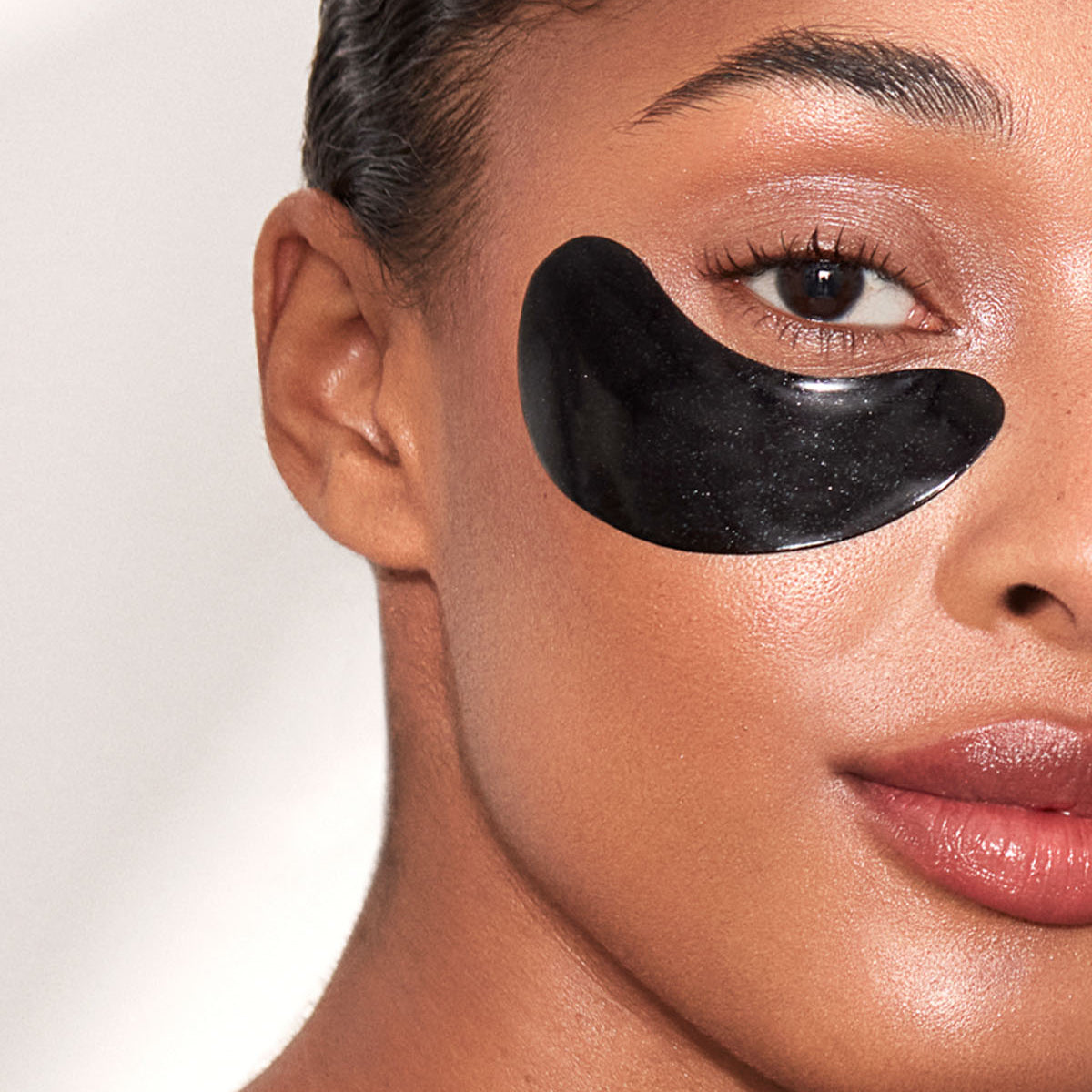
Eye Lift Gel NAC Y²™ is a lightweight, hydrating option for visible wrinkles, dark circles and puffiness, with a lifted-looking finish. It contains NAC Y²™, Argireline and Caffeine. In 111SKIN's reported clinical trial of 30 participants using Primos CR, it reduced wrinkles by 35% after two weeks.
Use it morning and evening before serum. Share half a pump between your ring fingers, pat from the outer corner inwards, then move upwards and sweep over the brow bone back to the outer corner until absorbed. Avoid rubbing under the eyes.
Puffiness, dark circles and fine lines can overlap, but they are not interchangeable. Hydration helps the area look smoother, while shadows may also reflect pigmentation or facial anatomy. Applying more pressure will not resolve every cause of a tired-looking eye area.
Treat jaw tension as a comfort concern
For a jaw that feels habitually clenched, the most important starting point is to let it rest. Gentle surface circles can feel soothing, but avoid searching for a painful "knot" and trying to force it to release. Facial massage should not become a test of how much pressure you can tolerate.
Jaw pain, headaches, clicking or difficulty opening your mouth deserve advice from a dentist or clinician. They may require an assessment that goes beyond cosmetic care. Do not attempt deep intraoral or buccal massage on yourself as a solution.
Adjust for dryness, sensitivity and blemishes
Dry-feeling skin often benefits more from suitable hydration and moisturising care than from a longer massage. Shorten the movements if the skin begins to feel tight, and avoid working over flaky patches. Skin that is already stinging or irritated needs a pause from friction.
For blemish-prone skin, avoid rubbing directly across inflamed spots or squeezing them during the sequence. You can leave an affected area untouched and apply skincare gently elsewhere. If much of the face is inflamed or uncomfortable, skip the massage and focus on appropriate care.
Fit massage into one coherent skincare routine
Keep facial massage within a routine that already meets your skin's needs. There is no need to add a treatment at every stage, and repeated massage through cleanser, serum and cream can create unnecessary friction. Choose one brief opportunity for facial gliding.
A practical routine is:
- Cleanse. Use Cleansing Oil as described above, then rinse and pat dry.
- Apply eye care if using it. Eye Lift Gel NAC Y²™ goes before serum, following its dedicated patting and brow-bone sequence.
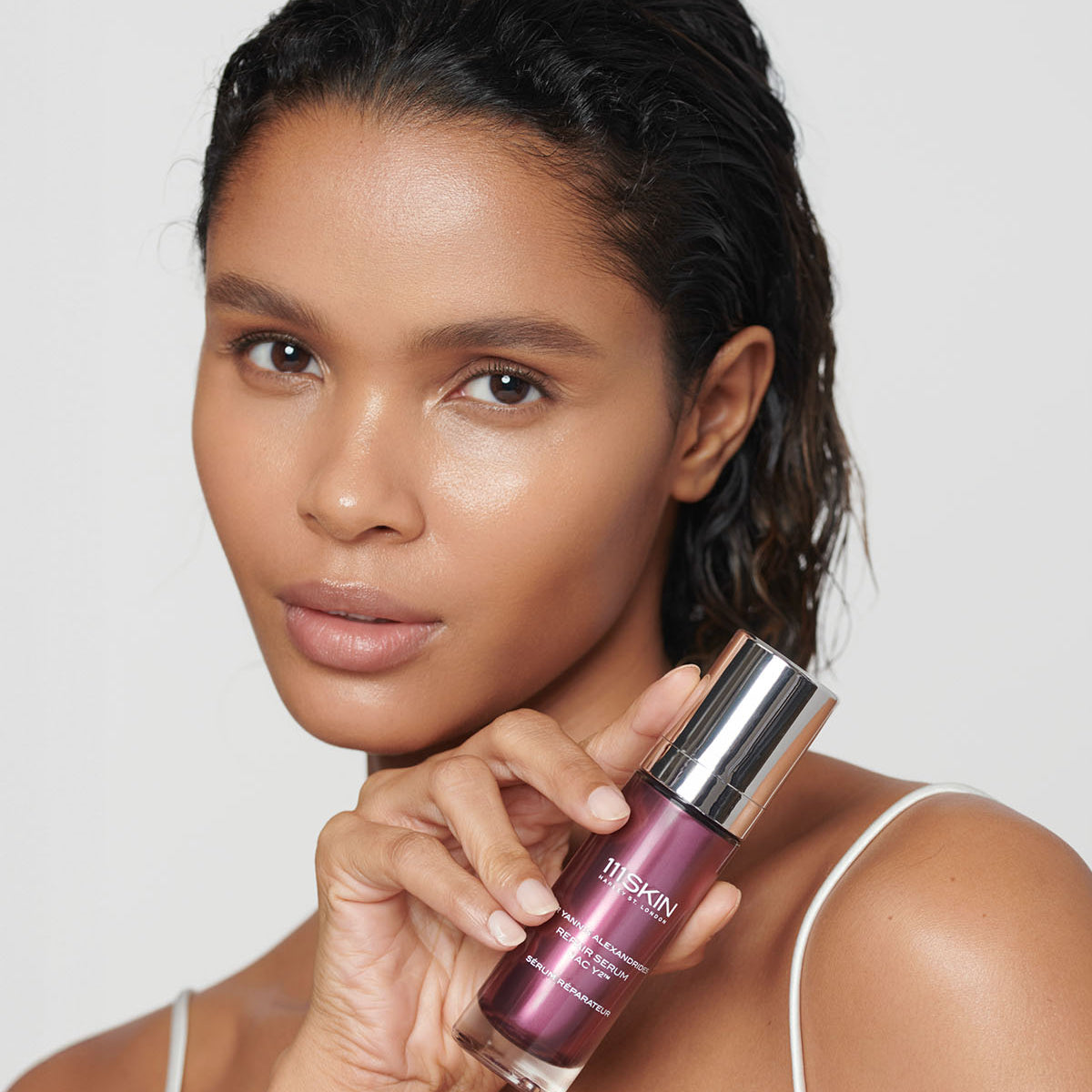
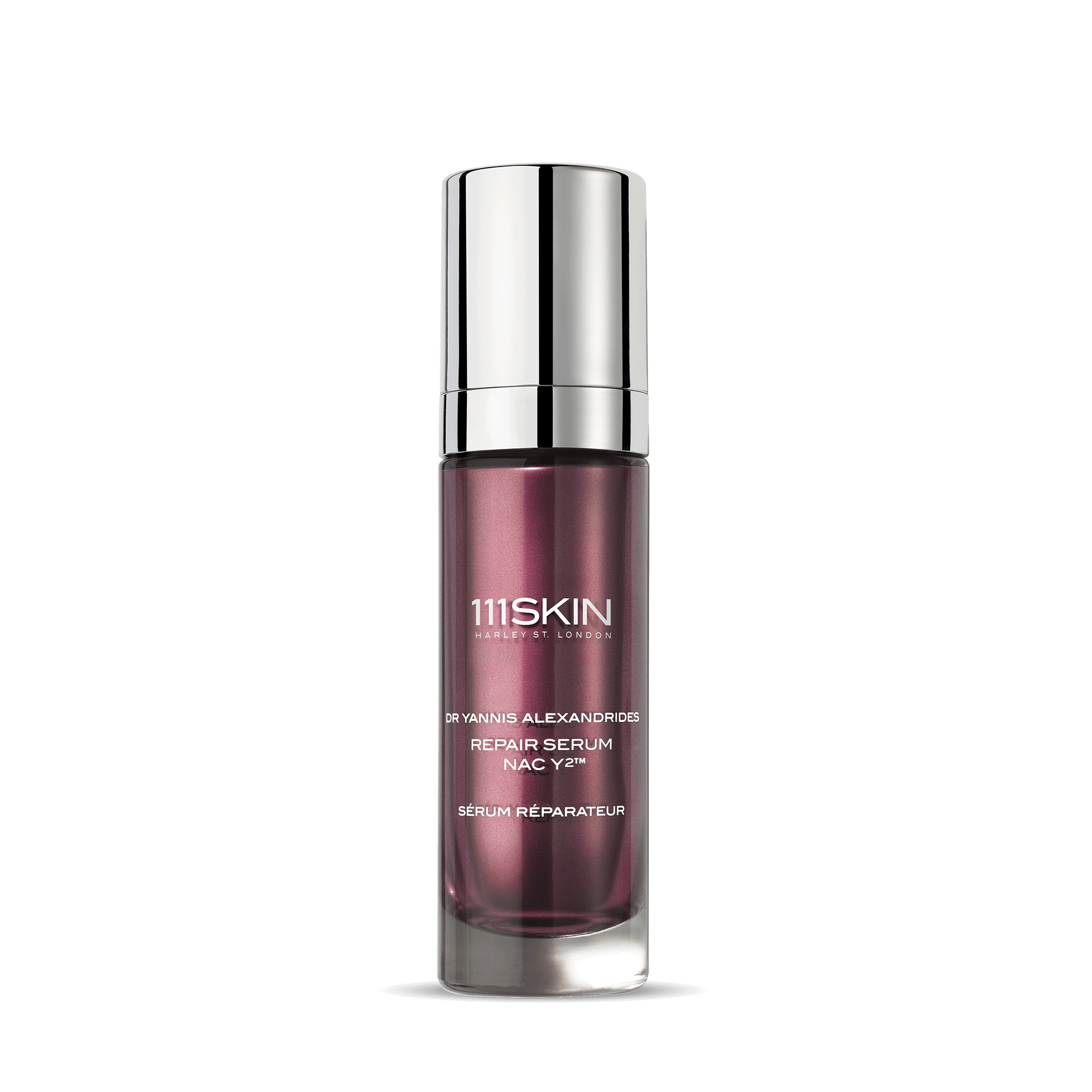
- Apply your serum. Use 1 to 2 pumps of Repair Serum NAC Y²™ over the face and neck, morning or evening, before moisturiser.
- Moisturise and include your brief massage. In the morning, apply a pea-sized amount of Repair Day Cream NAC Y²™ to the face, neck and décolletage after serum. In the evening, use a pea-sized amount of Repair Night Cream NAC Y²™ over those areas after serum. Use the facial sequence only while there is comfortable glide.
- Complete daytime protection. Apply Repair Sunscreen SPF50+ generously and evenly after moisturiser, 15 to 20 minutes before sun exposure, and follow its exposure and reapplication directions.
Repair Serum NAC Y²™ contributes hydration and smoother, plumper-looking skin, while also addressing visible redness and early signs of ageing. Its cooling, velvety texture makes application a considered part of the ritual without needing to be worked repeatedly into the face. It received Tatler Best Serum for Repair, Beauty Awards 2025.
Finish all massage before sunscreen. Once sun protection is in place, avoid treating it as another massage medium, since rubbing can disturb an even application. The aim is a complete routine with a short moment of touch, not a series of lengthy manipulations.
When a de-puffing mask is a better fit
If your main concern is visibly puffy, tired-looking skin, a targeted mask offers a different experience from hands-on massage. It can be useful when you want to leave the face undisturbed while addressing that appearance.
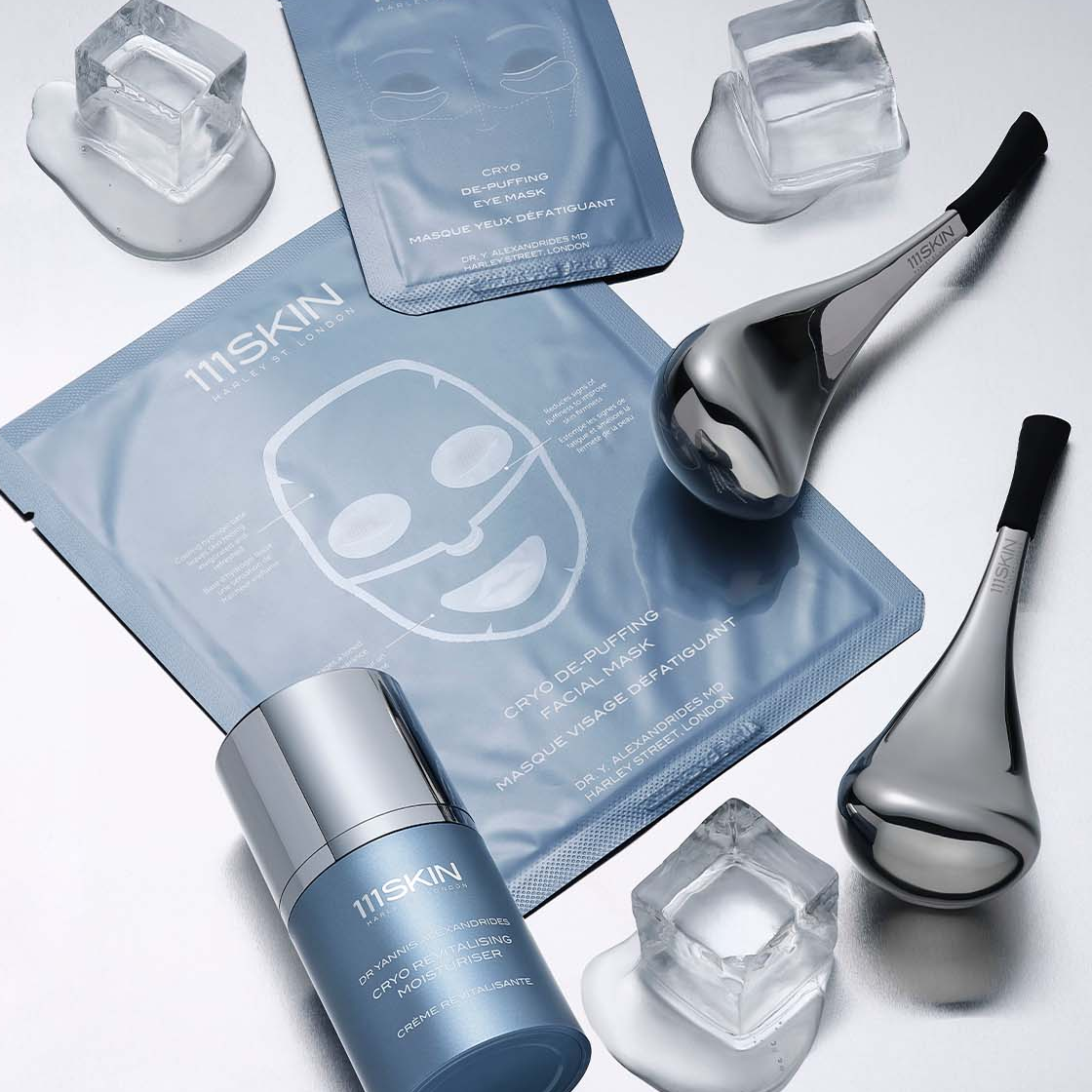
Cryo De-Puffing Facial Mask is a two-piece hydrogel mask featuring Caffeine and peptides. Apply it to clean, dry skin after cleansing, morning or evening, wear for 20 minutes, then remove before subsequent leave-on skincare. It may be refrigerated before use.
The mask's de-puffing purpose is distinct from the relaxation offered by manual movements. You do not need to massage over it or add a full facial sequence afterwards. Resume your usual skincare gently once it is removed.
For event preparation, this can be the simpler decision: use the mask for visibly puffy, tired-looking skin, or choose a short manual ritual when relaxation is the priority. Avoid testing an unfamiliar, intensive technique immediately before an occasion when you want the skin to remain predictable.
Avoid the mistakes that make massage uncomfortable
More pressure and longer sessions are not better
The most common mistake is continuing after the product has absorbed. Fingers begin to catch, so pressure increases to keep them moving. That is the point to finish, not to rub harder.
Repeatedly working one line or fold is another unhelpful habit. Massage is not a way to mechanically flatten a wrinkle, and vigorous friction can leave the area irritated. Likewise, pinching the jaw does not remove fat or create a permanent contour.
A useful stopping point is the first loss of easy glide. Finish while the skin feels comfortable, even if you have not completed every movement.
Frequency should follow the same principle. Start with an occasional short session and assess how your skin feels afterwards and the following day. There is no need to work towards daily massage or to compensate for missed sessions.
Know when to pause or seek tailored advice
Skip massage over broken skin, sunburn, bruises, active infections or an irritated flare-up. Stop if you develop pain, burning or persistent redness. If irritation continues, seek professional advice rather than repeatedly testing the area.
After injectables, surgery, laser treatment or another facial procedure, follow your treating practitioner's aftercare and ask when massage can resume. Healing needs vary, so a universal waiting period is not appropriate. Scar massage also needs guidance specific to the scar and its stage of healing.
Hands are sufficient for this beginner sequence. A roller or gua sha tool changes the contact surface and technique, but does not automatically produce better results; use a tool's own instructions and keep it clean. Leave deep sculpting, intraoral work and treatment for diagnosed swelling to trained professionals.
Conclusion
The best facial massage techniques are controlled, light and easy to stop: outward glides across the cheeks and forehead, gentle jaw movements and a few soothing circles at the temples. Keep eye care precise, let product glide set the session length and finish before applying daytime sunscreen.
Begin with a short ritual within your usual moisturising step. Repair Day Cream NAC Y²™ or Repair Night Cream NAC Y²™ can provide the relevant moisturising care, while your skin's comfort determines how much movement to include. For a more personalised starting point, use the 111SKIN skincare quiz to identify care for your main concern before adding extra steps.
As with any skincare product, patch test before first use. If you are pregnant or breastfeeding, consult your doctor before using any skincare products.
FAQ
How often should you massage your face?
Begin with an occasional short session and see how your skin responds. There is no universal schedule or need to build up to daily massage. Reduce the frequency or stop if your skin feels sore, irritated or unusually sensitive.
Can facial massage reduce wrinkles or lift the face?
Facial massage can help you relax facial tension and may temporarily improve the appearance of puffiness. It does not reliably erase established wrinkles or permanently lift the face. Hydrating and targeted skincare can address visible lines as part of a consistent routine.
Do you need a facial oil for massage?
No, a moisturiser that gives your fingertips comfortable glide can be sufficient. Stop once it absorbs and your fingers begin to catch. A treatment oil should be used according to its own directions, not treated automatically as a massage oil.
Is facial massage the same as lymphatic drainage?
No, a general cosmetic facial massage is not the same as specialist manual lymphatic drainage. Gentle massage may temporarily improve the appearance of mild puffiness, but diagnosed swelling needs guidance from a clinician or trained therapist. Persistent, painful or unexplained swelling should be assessed before you massage it.